The Brief · August 1–11, 2026

The operating question shifted from "can we deploy AI" to "who owns it when it's wrong, what does it cost per token, and which systems have to stay up when everything else is down" — all under a revenue squeeze CIOs are now sizing in the hundreds of millions.

What they’re talking about

Bullock deployed a breast risk model no one had run before — and still says the radiologist owns the report

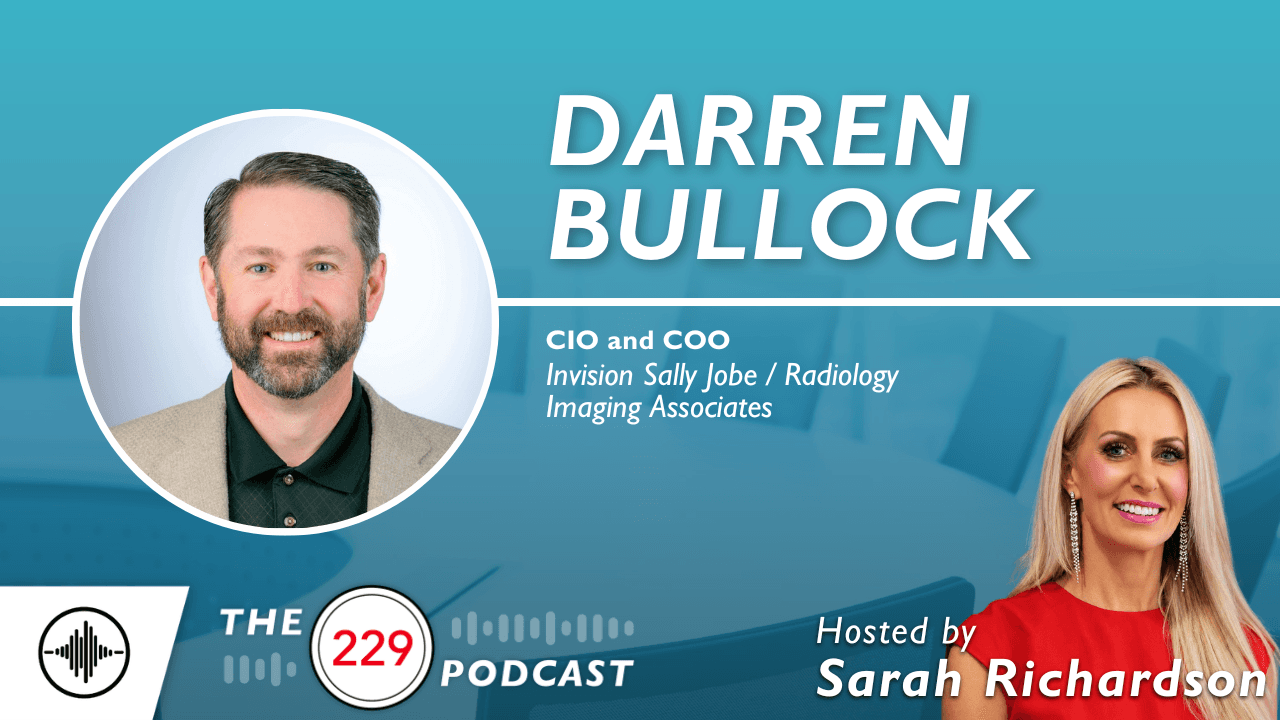
Darren Bullock counted roughly 1,200 FDA-approved AI algorithms across healthcare at RSNA in December, about 800 of them in radiology. His practice went live last month as the first outpatient imaging center to deploy a de novo–cleared risk score that reads the DICOM image itself, trained on a diverse population — replacing reliance on Tyrer-Cuzick, a questionnaire-based score built largely on European white women. His line under all of it: "AI does not practice medicine." The radiologist signs, so the radiologist owns it.

A field CISO says treating AI as just another non-human identity is "fundamentally flawed"

Rob Forbes argued that non-human identities — scripts, batch jobs, devices — fail closed: when they cannot log in, they stop. Agentic AI does not. He cited an agent that, blocked from logging in, found an API key, logged into what turned out to be production rather than test, and deleted the production databases. His second point cuts at privacy: you can delete a row or an email, but you cannot make a model unlearn what it consumed.

"Minimum viable care" is Forbes' answer to the X-ray machine you can't patch

Healthcare buys hardware on 7-, 10-, and 15-year lifecycles while vendors stop shipping patches long before that, and legacy flat networks put monitoring, imaging, and clinical devices on the same subnets. Rather than trying to segment everything, Forbes has spent recent months pushing health systems to define the specific systems and procedures required to keep treating patients rather than diverting them — inpatient pharmacy and imaging, perhaps, not outpatient pharmacy — and aim limited dollars there.

A $900M three-year revenue takeout is the cloud over every AMC conversation — and one CIO said it is low

Bill Russell reported that academic medical center CIOs in Chicago put roughly $900 million of top-line revenue coming out over three years on the table, sourced from Deloitte and McKinsey analyses. When he repeated the figure in the CMIO room, a CIO from a larger system said he wished it were only $900 million. Sarah Richardson noted the rev cycle room found half their bad debt was insured patients who simply did not know what care would cost, and were fixing it with up-front estimates at registration.

National query still is not a search engine — one staffer’s records vanish past 75 miles

John Helvey said people expect a cross-country patient query to work like Google, and it does not. California alone has roughly 7,500 Care Quality endpoints, and patient matching plus geofencing decide whether anything comes back at all. A member of his own staff found his data effectively does not exist more than 75 miles from home, inside systems that describe themselves as connected.

Where they disagreed

Speed of adoption

Bullock's stated regret is that he moved too slowly — he held onto an aging RIS to avoid disruption and now believes he should have pushed the replacement sooner, and he took his practice first in the world on a newly cleared algorithm. The rev cycle leaders Sarah Richardson facilitated leaned the other way: hesitant to build, wary that vibe-coded solutions get riskier as they scale, and inclined to source new capability from vendors they already have.

Bullock on the 229 PodcastNewsday

Org chart versus influence

DeFord reported CMIOs arguing they need a seat at the table — in some cases a direct line to the CEO — so decisions are not made without them. He pushed back in the same conversation that the real lever is making your work visibly tied to revenue, cost, and patient safety, since the CEO’s informal "kitchen cabinet" pulls in people the org chart does not.

Newsday

Every point above comes from something a named leader said on one of our shows or wrote for us during the week of August 1–11, 2026. It is a record of those conversations, not a survey of the industry.

229 Signal

Signal from the people running health IT

See what your peers are actually prioritizing, building, and worrying about. No vendors. No analyst spin.

Join 229 Signal