

 Apple Podcasts
Executive Interview · 19 min listen
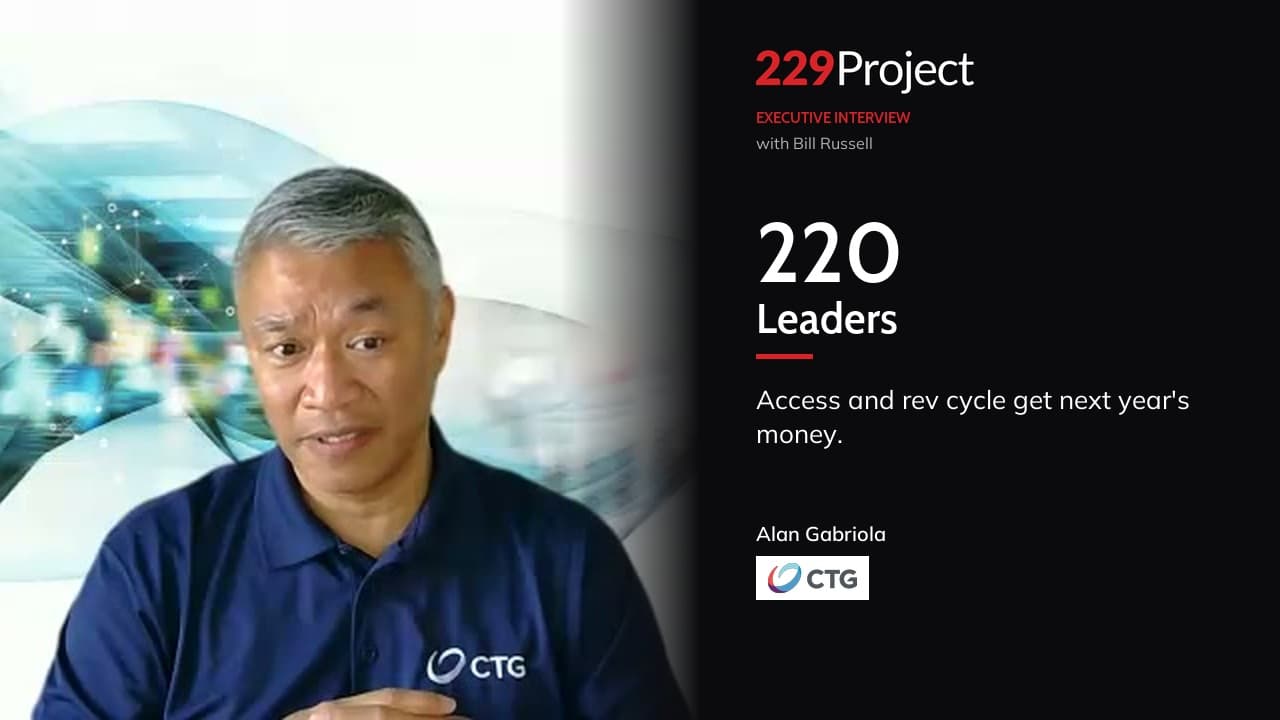
September 2, 2026: Alan Gabriola (VP of Healthcare, CTG) sits down with Bill Russell. CEOs come home asking why the health system is not doing more with AI. The CIO already knows they can. The shop never finished the hard work underneath. 220 leaders told 229 where next year's money is going: access and revenue cycle. Alan's line for what actually wins: not the most AI. The operating model.
Guest: Alan Gabriola (CTG)
Key Points:
0:00 The winners don't have the most AI
0:06 Both sides of the table
3:13 You cannot sprinkle AI on a messy model
7:09 CTG
7:50 220 leaders: access and rev cycle
10:06 What stalls the work
12:52 Governance as differentiation
15:16 Why CTG
19:05 Speed to outcomes
21:06 Close
Donate: Alex's Lemonade Stand: Foundation for Childhood Cancer
Keep up to date on the latest in health IT:
https://thisweekhealth.com/news/
This transcription is provided by artificial intelligence. We believe in technology but understand that even the smartest robots can sometimes get speech recognition wrong.
The Winners Don't Have the Most AI
[00:00:06] Bill: All right, today we have an executive interview with Alan Gabriola, VP of Healthcare for CTG, formerly with, Hartford HealthCare, Northwestern, and others. So you've actually sat in the chair, and now you're, you're, you're now on the partner side in, Now, is it… I would assume it's very different on the other side, isn't it?
[00:00:29] Alan: It is. You know, my career is a good balance between the two, right? I grew up initially in healthcare IT in the partner side, on the management consulting side of the house, initially starting out at cross-industry before focusing specifically on healthcare. And when I say healthcare, I mean kind of the broad healthcare, payer, provider, life sciences, pharma.
[00:00:54] Alan: And then also, make, making, some of my career progression within industry. Some in provider for the most part. So, yes, a little bit of both. It's actually an interesting perspective to be… to have sat on both sides of the table. Yeah, that's… that's.
[00:01:10] Bill: That's what I find as well. You know what I miss, and I get in trouble for saying this, is… I felt like on the consulting side, I was getting smarter every day, and when I sat as a CIO for a health system, I was getting dumber every day, just because there's so much operations on you, like, you don't have time to consume things, but as a consultant, you're going from… I mean, I was going from, like, McDonnell Douglas over to…
[00:01:34] Bill: You know, over to Anheuser-Busch, then over to Monsano. It's like you're dealing with different problems, different people, and you're just… I mean, the learning is just endless from that chair. I'm not saying everybody should do it, I'm just saying it… there is real value with having spent part of your career there.
[00:01:51] Alan: Yeah, you know, I would echo that, but specifically, the ability to establish that connective tissue across industries, and then bring what might be innovative in one industry and something that's been long-standing practice in another, and then being able to draw that connection, and then identify the value. It's interesting, Bill, because
[00:02:14] Alan: You know, as I joined, you know, other provider organizations fresh out of consultancy, actually of the last organizations I joined, it was an interesting dialogue, particularly outside of IT, where
[00:02:30] Alan: they were asking me to join their organization because they appreciated the background I had from a consulting perspective, but then as soon as I joined the organization, they turned around and say, you know, would it be better good for us to talk to consultants and see what their perspective is, like, well, I was just there a month ago, so…
[00:02:49] Bill: Yeah, it's,
[00:02:50] Alan: registered.
[00:02:51] Bill: A prophet is not welcome in his own home, is the thing I say. And sometimes the expert from afar, they just put more… credence on it, and it's not always… it's not always warranted. Ctg, you guys are all over… I mean, you guys do a lot of things, applications, cloud, advisory data, service desk, talent. You're one of those organizations that has a… sort of a credo of.
[00:03:14] Bill: you know, we'll come in and listen to you, and we have a lot of resources to do things. I want to… I just want to put that in as the backdrop, and then we're gonna talk about the industry and some of the challenges that are going on, you know.
[00:03:27] Bill: AI has sucked the oxygen out of the room. You know, AI is not a… necessarily a technology decision anymore, it's an operating model decision, and one of the things that's happening is these CEOs
[00:03:43] Bill: are going… they're going into these meetings that CEOs go to, and they're hearing from these really high-powered, smart Silicon Valley consultants, like, AI can do this, and AI can do that. And, then they come back to their organization, and they either say, why aren't we doing more with AI, or can we do more with AI, or that kind of stuff. And, you know, I… sometimes the CIOs are getting frustrated, because they're like.
[00:04:07] Bill: We can do everything you just described we can do, but you heard from this health system, who had the difficult conversations around standardizing
[00:04:18] Bill: physician schedules online, and they had to… and we haven't done that. Like, for… we've kept kicking that can down the road. Well, because we kicked that can down the road, we can't just magically sprinkle AI on top and it works now. I mean, these are becoming serious.
[00:04:33] Bill: operational discussions, not necessarily technology discussions, is what… is what I'm hearing. How about… what are you hearing from, from your clients and from your, from your seat?
[00:04:44] Alan: The same themes, Bill. We put it in maybe a complementary context. the discussions that I'm having with, and even in my short tenure here at CTG,
[00:04:57] Alan: is all around what does that… what does AI look like for us, really? You know, from an outcomes perspective. And the conversations I've had had the same underlying themes, where it's not about adoption anymore, to your point, it's all about
[00:05:15] Alan: reimagining what the operating model looks like. And maybe said a little differently and more specifically with the CIOs that I'm having conversations with. The CIO's role, you know, historically has been technology maybe, shepherding the investments of technology, to really becoming more of
[00:05:36] Alan: part of the fabric of operations, and ultimately not even just orchestrating the investments in technology, but truly beginning to orchestrate operations. People, process, technology, because they are no longer just operating technology. They are truly
[00:05:56] Alan: again, part of the fabric of operations, and are really starting to get into the perspectives of more of a COO as opposed to a CIO, right? And the other thing that's an interesting theme that is starting to emerge and the more forward-thinking CIOs that I'm talking to is.
[00:06:18] Alan: sure, reimagining the operating model of a healthcare system, but how do they do that by demonstrating that within their own organization? Because I think CIOs now are really starting to evolve from the implementers, the supporters of technology.
[00:06:37] Alan: To really orchestrating that of intelligence and capability, as opposed to single investments, or stitching together single investments to truly drive outcomes to advance healthcare.
[00:06:52] Bill: Yeah, the CIO role's going in two directions. Either they start to become what would look like a chief transformation officer, or they start to act… they start to settle in as sort of the…
[00:07:05] Bill: I'll keep everything running and operating, you just tell me what to do, order taker kind of thing. We… you know, we just finished a survey. We are, sitting here. This won't… this will obviously air after this, but we are, on Thursday, the week of UGM,
[00:07:50] Bill: And, we did a survey, we got 220 leaders to respond, and it seems, you know, I asked them, like, hey, where's next year's money being allocated? And there's two areas that clearly won. One is, is access. And the second is RevCycle.
[00:08:07] Bill: I think that's indicative of the belief that AI can have an impact on access and rev cycles. I mean, what are your thoughts on that?
[00:08:18] Alan: Oh, I'm seeing that as well, right? So, access in terms of the healthcare systems on the provider side, ability to really Close… care gaps as they engage with their patients, right? So think about MyChart, right? How, how care starts at the couch at home.
[00:08:41] Alan: And then instead of calling a call center and going through the typical call center workflow, you're really helping the patient go straight to their appointment, or straight to the outcomes of their labs. So, really.
[00:08:57] Alan: reimagining the engagement model, and closing that care gap as a way to make sure that you've got improved access, and ultimately ensuring that, through RevCycle, that our patients are getting the right care at the right time, and not
[00:09:16] Alan: and removing the friction, if you will, on pre-authorizations, for example, or denials, to ensure that they're getting the right care in a timely manner. I absolutely see that. In addition to
[00:09:28] Alan: Things like removing, you know, friction in the clinical workspace, like reducing pajama time for physicians, and increasing time at the bedside for nurses, and reducing alert fatigue.
[00:09:46] Alan: So I think that's where the… some of the money will be in terms of access, removing operational friction, clinical and back office, as well as, you know, the outcome related to making sure that they have proper Timely care from a revenue cycle perspective.
[00:10:06] Bill: Over… there was a question on what's going to make these projects stall. And, I'm curious, I'm not even gonna give… Out of curiosity, what do you think is the biggest thing that's causing
[00:10:19] Bill: these maybe strategic projects with money allocated and technology, you know, to go? What's… what's… what's, what's causing them to stall? Do you… either do you see or do you think is going to cause them to stall over the next, 12 months?
[00:10:36] Alan: I see and think it's, it's, it's, it's the velocity breadth and depth that AEI represents. You know, ultimately, quote, the winners of the AI era isn't the organizations that has the most AI.
[00:10:53] Alan: It is the organizations that, as we talked about earlier, can reimagine their operating model, recognize that AI and its complementary technologies are really affording that opportunity to look at your operating model and how you
[00:11:10] Alan: deliver value to your patients and clinicians in a different way, right? So, it's not about adoption anymore, it's truly talking about what is the operational model, given these new capabilities that we have.
[00:11:26] Bill: Yeah, I sat next to a CEO of an AI startup in one of my flights, and we were sort of sharing notes, because I've been vibe coding, and clearly his team is doing amazing things with
[00:11:40] Bill: coding, and so I took the opportunity to sort of sit there and get some information from him on what they're doing, and he was looking at this stuff, he goes, you know, the number one thing we have found
[00:11:52] Bill: now is that you can generate tons of code, and you can almost do anything. Like, if you can imagine it, you can do it. And he said that the number one thing that's going to distinguish successful organizations from unsuccessful organizations is knowing what to build.
[00:12:08] Bill: Because you can almost build anything now, and understanding your capacity to do so, and you're, you know, the velocity is serious, and when you have to reimagine things. It's, it's interesting to me,
[00:12:24] Bill: Because that's… that is not… that is a communication, project, that is a getting people on board. It's like, hey, you can reimagine whatever you want. If you can't get the physicians and the… and the nurses to agree that that's a… I like the way you're imagining that. You might have a 12-month to a, you know, 2-year stall because you didn't…
[00:12:46] Bill: Engage them correctly, bring them along correctly, and have the right conversations along the way.
[00:12:52] Alan: Yeah, I agree. So, maybe from a different perspective. you know, we… governance for AI is a very popular topic. But I… I would… I would complement that thinking with, I think governance is no longer something that is
[00:13:09] Alan: assumed, that is table stakes. I think governance is really going to be an enabler of strategic differentiation, to your point, right? For those that can really understand how to leverage AI and then orchestrate, curate the different capabilities.
[00:13:29] Alan: And interweave their operating model with people, process, technology, right? To really then demonstrate what the value is for the clinicians, those healing hands, that then advance healthcare for the patients' outcomes that we are fortunate to serve within an industry Being able to communicate that
[00:13:52] Alan: In a governance context, in a strategic context, so that people can understand where you're headed, what's in it for them. And then being able to, Get the support that you need from your organization to
[00:14:10] Alan: to transform into the operating model that you're looking to transform. I think that's… to the question around what will stall these efforts and investments, it's that lack of clarity. You know, again, we talk about investment.
[00:14:26] Alan: adoption, I think we're beyond that. I think now that just AI and all the resulting technologies really has, begs the question, how are you doing business? How are you providing value? And to who are you providing that value, right?
[00:14:45] Bill: Yeah. You know, I'm smiling because my chief of staff, she's always saying to me, it's like, clarity's king, clarity is king. And I'm like, well, it's really clear in my mind, she goes, that's not enough. Like, we've got to get it out of your brain.
[00:14:59] Bill: Get it in front of people, give them… and she's always talking about it takes time, so you gotta communicate it once, give them some time to digest it, answer their questions, you know, and it's a, it's a process. Two-word question for you. You had a lot of options, I'm sure. Why… why CTG?
[00:15:17] Alan: Yeah, actually, you know, my own leadership team asked me that question. You know, I… having been on both sides of the table, if you will, as a client and as a consultant, what I've come to realize is, to your point, somewhat to the point that you shared earlier, I'm truly a consultant at heart. I grew up in consulting.
[00:15:40] Alan: Okay? And the reason why I like it is because it gives me the platform to make a difference. Now, to your question around why CTG,
[00:15:52] Alan: you know, I have long-standing relationships with, you know, the top 5 largest consulting firms in the world, to be honest with you. I'm very proud of those relationships, and very grateful for how they've informed and empowered my thought process and leadership approach.
[00:16:12] Alan: However, in this stage of my career, what I'm looking for is really a platform to make a change as opposed to becoming part of a machine, if you will. Right? Ctg affords me the platform to really look at how CTG can continue to build on our six decades of,
[00:16:33] Alan: helping our clients, partnering with our clients, to navigate change in 35 of those years focused on healthcare, on how then we might leveraging the AI era be part of how we look at the operating models to drive value across healthcare.
[00:16:52] Alan: CTG is pretty unique, not just in terms of their six decades of history and their capabilities, but also the people that have
[00:17:04] Alan: you know, invested by choice, their careers. I am humbled, Bill, when I was going through my options, with individuals who've been there for the… there are no less than a dozen individuals that have chosen to go to CTG, and that was their first and only job.
[00:17:23] Alan: So, that's a very rare situation, and now that I'm fully in there after a little over 100 years, I mean, 100 days? 100 years, 100 days, I'm humbled and see why they've made that choice.
[00:17:41] Bill: You know, I… the, if I were going to go back into the consulting world, you could go in, really, two directions. One is, you can go in the very narrow, specific.
[00:17:52] Bill: And, I liken that to, you know, you have one or two arrows in your quiver, so… but… but it's very focused and whatever. I mean, the CTG route, would, denote somebody who can reach back and grab, like, any one of 50 arrows.
[00:18:09] Bill: and bring a, you know, depth to a lot of those areas, especially after, you know, after having done this for a lot of organizations over that number of years. So you have client testimonials, you have work that you've done that's… And that's, that's, you know, if I were looking for an organization
[00:18:30] Bill: You know, I understand the people who are very narrow, but In healthcare, the challenge is, if you start narrow, you're… you find out you bump into all these other areas very quickly, and it's like, man, I…
[00:18:43] Bill: you know, we're gonna have to rely on that other firm, or this other firm. Well, that creates complexity for the firms you're dealing with, and they'd rather, in a lot of cases, deal with one firm that can go, yeah, you know what, we'll bring people in for… for RevCycle, we'll bring some people in on the tech side, we'll bring some people in here, so… I think that's… that's, that is one of the, that is one of the beautiful things. What do you…
[00:19:06] Bill: What do you anticipate, will be the types of projects you work on in the, in the next 12 months. What do you… what do you think is going to be the real focus of your work in the next 12 months?
[00:19:19] Alan: Yeah, it's really going to be outcomes-oriented. I just came back from one of our research firms who pulls a lot of our clients. And,
[00:19:30] Alan: they spoke up loud and clear. And they surveyed, clients that we've had for 20-plus years, Bill, right? And so, what they were talking about was. starting to really more focus around outcomes. And that's, you know, because of AI, the AI era.
[00:19:52] Alan: speed to outcomes is really what we're talking about. So, what I'm focused on in responding to that type of feedback is looking back in CTG,
[00:20:06] Alan: in our current capabilities, repackaging and reorchestrating that within our vendor ecosystem to focus on what those specific high-value use cases look like. So you'll see CTG start to really more focus around Clinical outcomes, business outcomes. And to use your analogy in terms of an arrow and a quiver.
[00:20:29] Alan: You're right, I can… I can pull out certain arrows specific to a particular area, or even multiple arrows, right? But that quiver holding those arrows is cross-industries part of Saheca. And that quiver… represents cross-industry,
[00:20:48] Alan: connective tissue that helps us look at certain ways, both in an industry-specific and relevant way, but also to be able to leverage what other industries have done to accelerate and inform the decisions and the possible outcomes we can bring to our clients. Does that make sense, Bill?
[00:21:07] Bill: That's fantastic. Well, Alan, we will have to keep in touch as things progress, and I appreciate you coming on the show and sharing your experience and wisdom with us, and Thanks for your time.
[00:21:22] Alan: I appreciate you, inviting us. Thank you.
Keep exploring
Executive Interview · Oct 28
Executive Interview · 19 min listen
Executive Interview · 26 min listen
Executive Interview · 17 min listen
Executive Interview · 26 min listen