

 Apple Podcasts
Executive Interview · 19 min listen
23:22
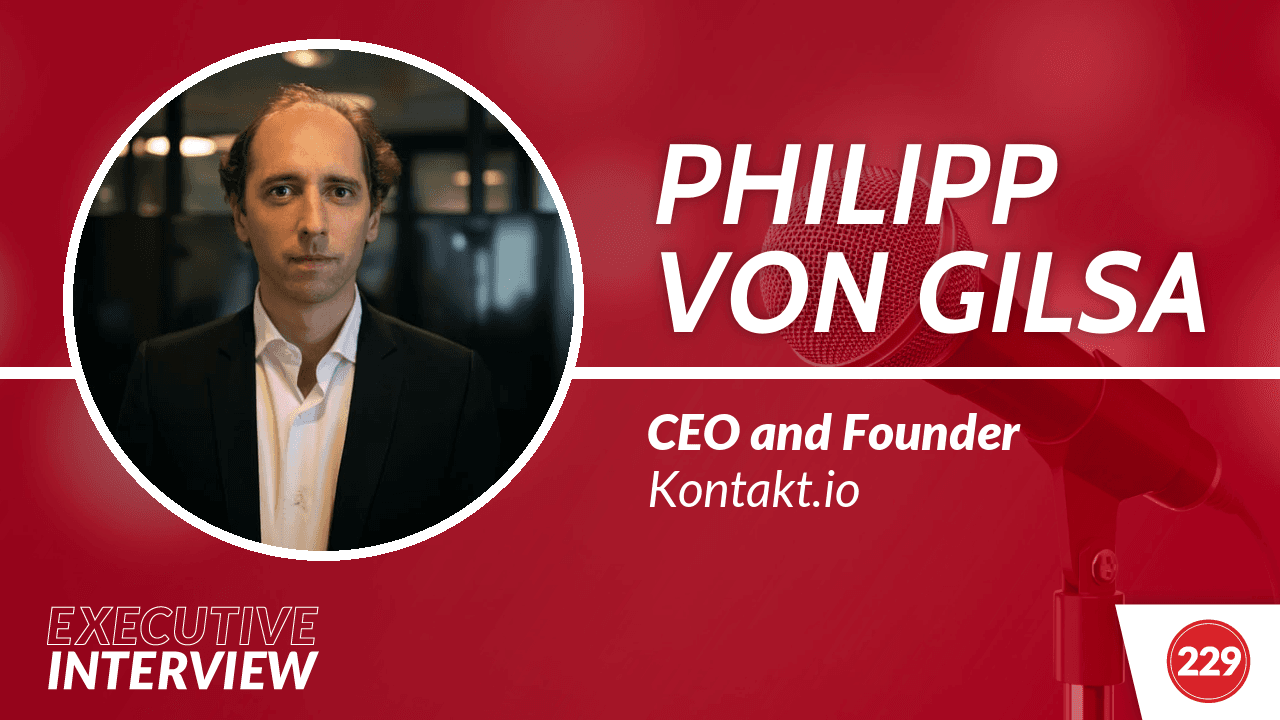
with Philipp von Gilsa
November 18, 2026: A hard ROI on the P&L inside 30 days. That is the test Philipp von Gilsa, CEO and Founder, Kontakt.io, puts on health system AI work at the end of 2026. "We have to be... visionary pragmatists... at the end of 2026," von Gilsa tells Bill Russell. What he means is a problem set "where within 30 days... you can show and point to an hard ROI that... hits the P&L."
The operational picture he uses is a clinic template: a recurring dermatology visit booked as a 30-minute block that, in his telling, takes 18 minutes, because "scheduling data, physical reality doesn't match." With 14 days of data, he can surface that and recommend a template change. The limiting factor, in his argument, is now data, not intelligence. "If I can give you 2.1 billion time series data points on how your operations are actually functioning for a 200-bed hospital per day... I feel there's gonna be a renaissance for this type of stuff."
Key Points:
00:05 Philipp von Gilsa
03:15 Visionary Pragmatists
04:06 The Clinic Offering
05:17 18 Minutes in a 30-Minute Block
06:46 Kontakt.io
10:22 The Limiting Factor Is Data
12:59 Internal AI Maturity
14:33 The Context Company
15:54 If You Were CIO
LinkedIn: 229Project
Donate: Alex's Lemonade Stand: Foundation for Childhood Cancer
Bill Russell 00:06
Alright, it's the 229 Podcast. Today, I'm joined by Philipp von Gilsa. Founder? CEO? of…
Philipp von Gilsa 00:13
Both.
Bill Russell 00:14
Kontakt.io. One of the things I like about you, you're one of those founders who can talk technology, talk business around healthcare, so… Looking forward to that. Philipp, we just finished an election. And…
Philipp von Gilsa 00:30
Yup.
Bill Russell 00:30
I think people are hoping that somehow this election will throw money back into healthcare. I'm not sure that's the case, because I think that the… the… I think it will start conversations in that direction, but I think next year's… sort of been written, money's coming out of the top line, health systems are, struggling there, and then they have seen AI really be inflationary. Across the board, I recently read an article Where they talk.
Philipp von Gilsa 00:59
By the way, is that still the feedback that you are getting, kind of, off the record, from the conversations? I mean, I know it's, like, the big thesis, and then you read Eric Larson's piece, and it all feels into it, but… What do people tell you?
Bill Russell 01:12
About what specifically?
Philipp von Gilsa 01:14
their AI being inflationary versus, like, you know, not really, you know, driving cost savings into the health system and, like, you know, another solution, and at the end, doesn't really move the P&L in the right way.
Bill Russell 01:26
You know, it's interesting, I just gave a talk this morning. AI is inflationary for most of healthcare. there are a handful of success stories. You have HCAs, nursing… well, actually, you're one of the success stories, but you have.
Philipp von Gilsa 01:39
Thank you.
Bill Russell 01:40
CommonSpirit, also being one of those that has seen some successes. And I think, you know, it's… That's… that is part of what I want to talk to you about, and the reason I sort of teed it up about the election, because I think people are thinking the election is going to all of a sudden change the conversation. I think it will change the conversation over the next year, but the government moves slowly in this country, so… So we still are going to have to tackle the things like inflationary AI, And to be honest with you, it's not the problem of inflationary AI. It's applying it to the right problem sets so that it delivers an ROI to the organization, and that's partially on us. to do that. I'm curious, from your seat, from your perspective, have you seen the connection to workflows that are delivering a return back to health systems today for their investment in AI?
Philipp von Gilsa 02:39
Yeah, I mean, look, the short answer is obviously going to be yes, and then I'll give you an example about what is it that we do, but that's too simple, so let's pause there just for a second. I feel… And I was on a panel, I think it was last week, talking about physical AI and sort of the broader next push. And the interesting piece is you had you know, actually Lab, the CEO of Hellocare.ai, one of, like, the smart room technology, you know, companies. You had Raul from SATA, which, you know, is a joint customer, and me, sort of, on the panel. And my kind of key summary on that note was. we have to be, you know, what I call, be visionary pragmatists, sort of, at the end of 2026. And what I mean by that is. you need to take on a problem set, yeah, or a solution domain, where within 30 days, yeah, you can show and point to an hard ROI that kind of somewhere hits the P&L, And very often, those have been sort of the domains and problems that people were trying to go after already for a long time, even in the pre-AI, you know, times. And then, the second thing is, now with all this AI, or I call it sort of intelligence abundance, yeah, a lot of the problems that have been around and people were trying to solve for a very long time can now be solved in a more effective way, yeah? And, if we are now looking at, you know, what we launched last week, which is kind of our, you know, clinic offering at large, then this is exactly one of those examples. And I'll explain to you, you know, the use case in one second, which is, you know, for our clinic offering. And we kind of brought our, you know, physical sensing kind of technology stack into the exam room. And what we do is we put a little sensor on top of the ceiling, which kind of understands at any point in time, without tagging patients, whether, you know, a patient is currently in the exam room, and then whether a provider is…
Bill Russell 04:47
The sensor's looking for RTLS, right?
Philipp von Gilsa 04:50
Yeah, no. Like, that's the thing. I mean, it does if a nurse is wearing a badge, but the sensor has, in this case, a thermal imaging array. In other words, now we're nerding out on the tech side, we understand heat. And from heat, I can deduct logically, using a convolutional neural network, whether there are people in the room right now or not. This is, like, stuff that's being used, like, for example, queuing, you know, theories, airports, people counting, these type of activities, right? And, what we're now doing is we're taking sort of that ground truth data of how physical space is actually being utilized, and we're combining and converging it with the EHR scheduling data. then you'll see, sort of, discrepancies, right? Like, discrepancies coming from the templates are always, you know, being used by 30 minutes, and there's no real time feedback loop from, you know, what's actually happening on the physical ground into the templates, and because of that, there's latent capacity that's being, you know, sort of hidden, because while I'm a recurring patient, Philipp, you know, I come for my, I don't know, dermatologist sort of appointment, they put in a 30-minute block, it takes me, however, only, you know, 18 minutes, and that 12 minutes is kind of being lost, and then other people are, like, not on time, etc. So there's a whole bunch of things where scheduling data, physical reality doesn't match. Yeah, surfacing those and then driving an actionable recommendation how the template could be optimized, I can do with 14 days of data. And I'm immediately in a position to now unlock additional capacity and show you that I'm able to add, I don't know, one additional patient. You know, for each three exam rooms on a weekly basis, right? That then translates into revenue, because that is a problem, and I, by the way, I printed a whole bunch of stats to be prepared. Average new patient appointment in America right now, across 6 facilities in the 20 largest U.S. metros, still 31 days. Only going up, not going down.
Announcer 06:46
All right, we're gonna take a quick break. Here's a word from our sponsor.
[Ad read: Kontakt.io] 06:50
This episode is brought to you by Kontakt.io. Kontakt.io delivers outcomes, not just boxed hardware. Unlike legacy RTLS software, their AI-powered RTLS platform supports better healthcare operations, immediate response for staff safety, 75% fewer equipment rentals, and 20% shorter lengths of stay. With a pricing model designed to deliver ROI in months, not years, Kontakt.io makes it easy to scale quickly and ensure operational excellence. Keep your staff safe, productive, and equipped to provide exceptional care at the right time, every time. Join leading health systems already transforming care with Kontakt.io. Learn more at thisweekhealth.com/kontakt-io. That's K-O-N-T-A-K-T-I-O.
Announcer 07:44
All right, let's get back to the show.
Philipp von Gilsa 07:46
So…
Bill Russell 07:47
Yeah. I mean, so this directly addresses an access issue that every health system is trying to address. Had a conversation with, Chero last weekend, and we… I asked him, I'm like, what are you most proud of? today. And he goes, the work my team has done around access, we've taken it from, you know, 45 days to roughly the average you just rattled off. And I'm like, I'm like, you know, but if you're 45 days and you bring it down, that's a real… given the scale of that. That's a significant improvement in all of the markets that they serve. Now what you're saying, this is almost like the cost accounting conversations. The health systems that implemented cost accounting, they have a visibility into the cost of healthcare that these other health systems don't have. And if they implement something like what you're describing here, they have the numbers to actually Look at and evaluate what's going on in each one of the clinics. And it's no longer anecdotal. It's no longer a doctor saying, hey, look, each one of these is 30 minutes. It's more like, hey, I know you think each one of these is 30 minutes, they're actually 18 minutes. Or the average is 18 minutes.
Philipp von Gilsa 08:56
And again, and I think, Bill, I'm just using this as an extremely, kind of, pragmatist example, because when we think currently kind of AI, everybody's thinking, okay. you know, you have your ambient listening, sort of, you know, domain, then maybe you have your, you know, outpatient scheduling and your voice agents, etc, and we think about what you are building with Grok, or your Claude instances. AI in its most simple terms, yeah, at least to the… a lot of the domains where we are applying it to, right, is, intelligence that is now abundant. It's, like, so cheap. Yeah, for simple terms, to make sense and to translate information into workflows. Yeah, that are then somewhere driving an automation that what used to take a lot of effort can now be done extremely fast and easy and scalable, by the way, either by us, or by Epic, or by Palantir, doesn't really matter, right? And so what becomes the limiting gating factor of any type of thing that touches what's happening within operations within the hospital, which is where, you know, a lot of the P&L, yeah, gets hit from a cost perspective, well. And the limiting factor is data. Yeah, like, I think it was, I don't know, a couple months ago, Google buying the Sprint dataset. We all remember, like, OpenAI suing, you know, the New York Times for their data set, like. if I can give you 2.1 billion time series data points on how your operations are actually functioning for a 200-bed hospital per day, and you don't need a 20-people team to make sense out of it, because we now have AI, your agent that you will have built with my MCP, you know, capabilities can now do things Much smarter in the physical world, and the exam room template is just one very mundane example you know, that can be optimized, right? And so I feel there's gonna be a renaissance for this type of stuff.
Bill Russell 10:54
So, the key foundation assumptions that you're putting out there, one is intelligence abundance, and we've expressed.
Philipp von Gilsa 11:04
Yup.
Bill Russell 11:04
if anyone who's using AI is like, wow, this is… this is pretty smart. This is… I explained this to the CTOs in the last CTO summit. I said, look, if you're not feeding every router, hub, switch, config, and log file into AI, and asking AI this, like, well, I have a team of people that does that. I'm like, yeah, but that person is a hub… router switch expert, this one's a cloud expert, this one's a, you know, infrastructure expert. I'm like, AI is… all of those things. Like, I can ask it, hey, you know, do a complete audit of… so it's… all I'm making the point is, it is intelligence abundance. It's, like, wildly abundant.
Philipp von Gilsa 11:44
Exactly, what I mean by that is, like, you can build it, I can build it, like, yeah, like, but generally, like, the building piece of it is so much easier.
Bill Russell 11:52
There's two things that are constrained. One is context and inputs. So you described, hey, we put this sensor in there, we get new inputs, we get new context, and then we apply the intelligence to it, and it says, hey, here's some things you can do it. So the inputs themselves are limiting. And then the other thing that's limiting, and this is on us as humans, it's like, it's ideas, it's thoughts, it's like, it's just sitting there and looking at it and going, alright, so this is the workflow today as it exists today. And we can optimize that workflow with AI, And that's going to be the next step. The next step is, hey, let's get some inputs, let's optimize with AI. The… the optimization one step after that is to say. you know, let's… let's… let's just look at all the assumptions around this workflow. Like, do we change the workflow itself because of the abundance of intelligence and the abundance of inputs? Like, do we all of a sudden come up with a different way of scheduling, a different way of routing patients, because Because it's… because it's possible. Quite frankly.
Philipp von Gilsa 12:57
Oh, yo.
Bill Russell 12:58
It wasn't performing.
Philipp von Gilsa 13:00
Exactly, and I think, let me actually pull this up for a second here. Like, I have… what I call an internal AI maturity tracker, right, where I'm going through every single department, and I'm assessing the AI maturity. And I'm not doing this based on, like, you know, that's Philipp's point of view. There's, like, all these frameworks, like the smart consulting companies, you know, they develop. I think the one we've been choosing is from you know, Accenture, and can I actually share my screen? Is this,
Bill Russell 13:36
Very good.
Philipp von Gilsa 13:36
this. Yeah, there's 5 labels, and I think exactly what you're talking about, right? We all started with, like, ad hoc, which is, like, people doing their little things. 4 and 5, which is… functions are now operating in a way that couldn't exist without AI. It's not about faster or different, it's new capabilities, new coverage, new signal, yeah, which is only kind of, you know, prior to that year at 4, which is the process is redesigned because AI exists, and even without AI, we couldn't have redesigned it that way. Like, that's what I'm looking for when I'm looking internally. How do we think about accounting? How do we think about marketing, right? Like, how do I think about my own chief of staff function? I read your piece over the weekend, like. I think the same is going to apply, at least if we zoom out for a second, for the next 3, 4, 5 years around how we deliver care, because.
Bill Russell 14:28
Well… So let me put you on the spot, then. So…
Philipp von Gilsa 14:33
No.
Bill Russell 14:34
Does this redefine your company? Are you no longer an RTLS company, or are you a sensor and context generation company?
Philipp von Gilsa 14:44
No, absolutely. Like, if I were to speak in AI analogies, like, I am two things for you. I am the context company for the physical world, let's stay in that regard, right? And then, and more importantly, I am the system of action. I'm becoming the system of intelligence for Physical orchestration of resources and capacity. That's it, like, that's my 10-second elevator pitch. Yeah, and why? Because… don't care, I'm headless. I'll make Epic 10 times better. In fact, like, our vision is, like, you know, we'll be deployed in every single health system that has an Epic instance, because we truly unlock that level of, you know, next generation of workflows automation, and it's not just an if this is then that type of trigger. It's understanding, it's load balancing, it's being sort of the cortex of context of what's happening in the physical realm. enriched to, you know, some additional context that then allows me to sort of drive, you know, resource and capacity decisions at scale, yeah? And that's what's needed to unlock the next 10-15 points.
Bill Russell 15:54
Well, I love your visionary pragmatist, so let me do this, let me…
Philipp von Gilsa 15:59
That was the visionary piece.
Bill Russell 16:00
Yeah, so I'm gonna fire you as the founder and CEO of Kontakt.io. I'm gonna put you as CIO for a non-profit health system. What is a Blair?
Philipp von Gilsa 16:12
We played this game before.
Bill Russell 16:14
I know.
Philipp von Gilsa 16:14
You fool.
Bill Russell 16:14
direct me from…
Philipp von Gilsa 16:15
that, like, immediately.
Bill Russell 16:16
Hey, you know, you can tell the people I think are really smart, because I ask this question all the time. I want to know, like, what a, what somebody who's playing with AI on a daily basis, what somebody who's… who's got a team who's developing some stuff, and looking at healthcare from… Different views, different lenses. So, you're a CIO for a non-profit. Visionary and pragmatist, you're… you're probably looking for the area, I would assume, because this is how I would think about it, you're… you're looking for the areas where you can have the most impact with the resources that you have, because you still have too many projects, too many things going on.
Philipp von Gilsa 16:52
Yep.
Bill Russell 16:53
And if you were going to go into the executive suite, you'd say, look. we have an opportunity here, and it's this. I'm not asking you for billions of dollars, I'm just asking you for a little runway, 60 days. Let me put together, you know, 1, 2, 3, you know, use cases and show you what is possible today. And, I really believe in the argument of the possible. It's like, show them, and then they go, oh my gosh, you know what else we could do? We could do this, we could do this, and let them identify the areas that might deliver the most return for the organization.
Philipp von Gilsa 17:28
Yeah, I mean, like, I know, I think taking my visionary, pragmatist example, and being in the seat I'm currently at, and now in the new seat you just put me at, I would put it even bolder. Like, I would go in and say, listen. I'm gonna do two things for you at once. Gonna help you reduce costs, Immediately, yeah. and I found a partner that has done that, and not on paper. They've helped, you know, HCA return a 7X ROI within year one, hard on heart. you know, a P&L return across the entire health system, by consolidating an existing effort that was called RTLS. Right away, you guys know what RTLS is? Yeah, you don't like it? Great. That's exactly where we came at it. The industry has evolved. Technology's not cheap, intelligence abundance there, like, it's a renaissance moment to look at this. And at the same time, this company has really thought about going beyond the traditional use cases of staff duress and asset, because quite frankly, those are the two that have, you know, populated 80% of the capacity of people in this space. They've pushed the boundaries into all these other problems that we're currently dealing with, like length of stay here, access there. So, we can kind of get two for one, yeah, and I can pay for it itself. And they told me, that the first hospital is on them, and after 30 days, they can show us what the benchmarking data set they would put together based on our actual data. So I think it's something worthwhile doing. And the second thing I would do, by the way. I would do, I think, on my first two weeks on the job, I would do an all-hands hackathon. not one day, I would extend it to two days, where everyone should be building with the.
Bill Russell 19:10
Stopping.
Philipp von Gilsa 19:10
abilities, because… Yeah, because it is not an intellectual problem. Like, you have to do it. You have to be in the arena, you have to play with these tools. Like, now, you know, there is now… I don't know, OpenAI launched Dot, right? I didn't build anything, I think, so now I just got really spending time on all of these, like. you know, personal agents that are now being launched that are, by the way, completely, again, changing how I'm thinking about my Chief of Staff project. Yeah, now I have a GitHub repository, that's the context, and I have my dot just interacting with that, and all the other things I've built, they're now kind of gone, because I like it better. Like, so there's just so much happening that if you're not… at least, you know, spending 10% of your time in it, I don't think… it's going to be very difficult to manage, because all these people saying, like, oh, this can't be done, or this, you know… So, you have to, you have to do it.
Bill Russell 20:08
This was part of the article that I wrote, where I talked about the… my… my… human chief of staff, who happens to be a fine arts major, and we gave her access to the repository, and the… she's a back-end, front-end developer now, and she knows no code, she knows no… whatever, but we put… we put all the controls around it, right? So we audit the software every day for security, we audit it for compliance to our coding standards, like, we do all those things. She doesn't know we do all those things, but we do all those things. If she happens to release code that doesn't end here, she can't take the system down, it's too modular for her to take the system down. And it can, essentially, it'll find whatever mistakes she made within the next… you know, hour to two hours, and plus it does audits as it's releasing the code. And so now, somebody who's a fine arts major, no development capability, she now releases more… she does more code releases than anybody on my team, including the developers. Because she sees it, she looks at it and goes, hey, this is… this would help the business, this would help this workflow, this information…
Philipp von Gilsa 21:09
but… and Bill, she is what I think, in this world, is the most important skill. She's a creative. She's a builder. And if you are a creative, and you're like, here's a problem, let me come up with the solution, this is steroids, yeah, and like…
Bill Russell 21:23
A thousand…
Philipp von Gilsa 21:24
there's… there's a thousand podcasts on this topic, but I do feel, there is… the health systems that we have partnered with the most, they happen to have a high degree of AI maturity, and then the conversation really moves from, oh, we are hiring you to solve problem A and B and C, which we are obviously doing, and, you know, ties back to capacity and all of these great things. it's to… this is just a foundational technology, and I don't… I can't envision a health system that doesn't have that data source as it… progresses and rewrites how, you know, care.
Bill Russell 22:00
And that's the thing, once you guys are implemented, the data keeps coming.
Philipp von Gilsa 22:03
That's N plus 1, exactly. And then people will be building their own stuff, and yeah, like, it's not even our ideas, and that's what it, you know, should be, but for that, yeah, that's the visionary piece, the pragmatist is… we'll piecemeal it, and we'll tell you exactly where to start, so it becomes… You know, easy.
Bill Russell 22:22
Do you give away the sensors at this point? And I could just install them all over the place, and…
Philipp von Gilsa 22:27
Yeah, I mean, we're not selling, like, we're not selling any hardware anyway. We will tie everything to outcomes.
Bill Russell 22:33
Nice.
Philipp von Gilsa 22:33
like, every SKU is, like, tied to an outcome, and then there are different degrees You know, of, like, fixed fee versus success, and that's always… Yeah.
Bill Russell 22:44
Well, we're gonna… we're gonna keep this conversation going. It is, beginning of November. I will see you in New York.
Philipp von Gilsa 22:51
New York.
Bill Russell 22:52
or a city tour dinner, and we have a bunch of CIOs who are going to be at that, and that will be a fun conversation. I love hearing what they're actually doing, and there's gonna be some pretty advanced CIOs in that room, so it'll be interesting to hear what they're… what they're…
Philipp von Gilsa 23:07
It'll be very fun.
Bill Russell 23:08
AI, stories is. Philipp, great partnering with you. Thanks, Phil. And, appreciate, appreciate you coming on the show.
Philipp von Gilsa 23:15
Thank you. Bye-bye.
Keep exploring
Executive Interview · Oct 28
Executive Interview · 19 min listen
Executive Interview · 26 min listen
Executive Interview · 17 min listen
Executive Interview · 26 min listen