26 Years, One Hospital: Gratitude and Agility | Flourish Sound Bytes with Laurie Wheeler
 Apple Podcasts
Paused
26 Years, One Hospital: Gratitude and Agility | Flourish Sound Bytes with Laurie WheelerFlourish Soundbytes
Questions Answered in This Episode
- What keeps a leader grounded and inspired after 26 years in one healthcare system?
- How can listening to frontline staff directly improve technology adoption and engagement?
- Why does curiosity matter more than tenure in leading through constant organizational change?
- How do healthcare and hospitality share the same foundation in building trust?
- What happens when leaders let data speak louder than emotion in healthcare?
About This Episode
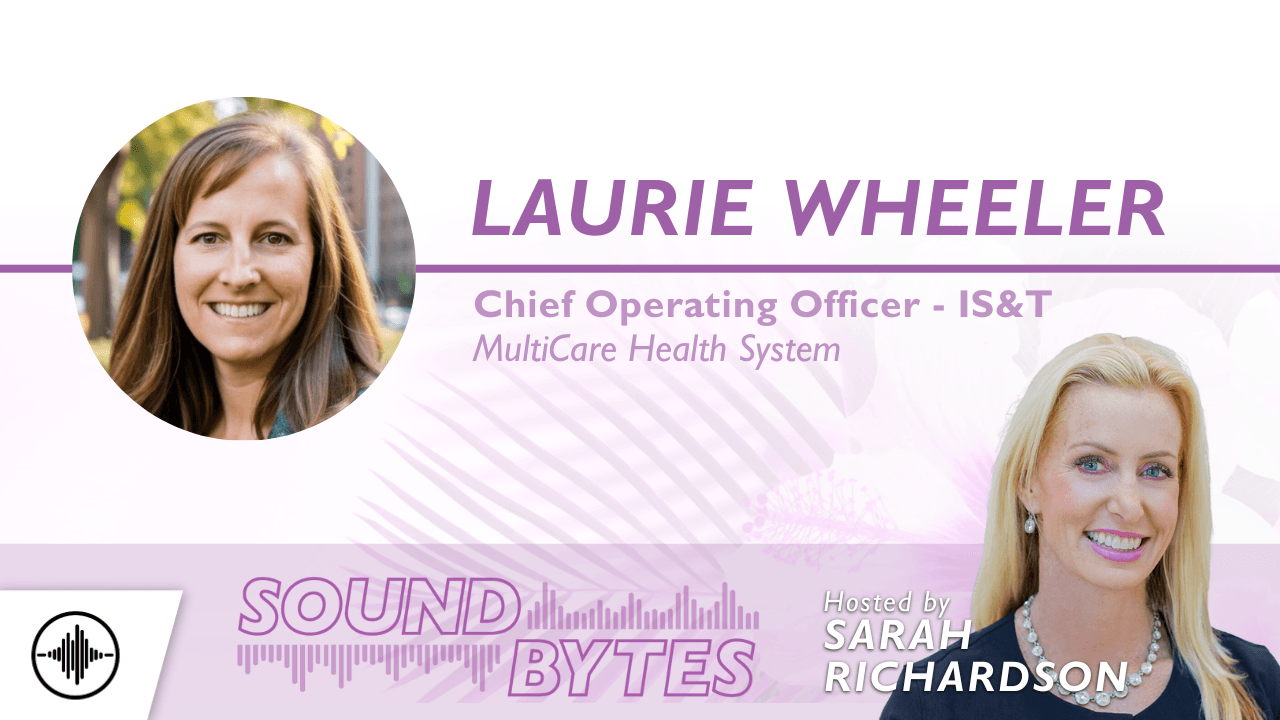
May 22, 2026: Laurie Wheeler, COO - IS&T of MultiCare Health System, is a leader whose philosophy centers on curiosity, humility, and genuine human connection. Laurie shares about her 26 years at MultiCare through listening tours, transforming employee engagement, and leading without ego. From teaching high-reliability courses to creating clinical super user groups, Laurie demonstrates how operational excellence and compassionate leadership create workplaces where people want to build careers they're proud of.=
Key Points:
02:18 Mentorship and Trust
09:57 Healthcare and Hospitality
13:00 Leadership and Humility
20:15 Speed Round and Final Thoughts
Donate: Alex’s Lemonade Stand: Foundation for Childhood Cancer

Transcript
This transcription is provided by artificial intelligence. We believe in technology but understand that even the smartest robots can sometimes get speech recognition wrong. 📍 📍 Hey, it's Sarah Richardson. Before we jump in, a quick note. This episode originally aired on Flourish, a show I hosted focused on leadership and culture in healthcare. It Flourish has officially joined the 2 2 9 Project podcast and over the next few weeks, I'm bringing some of my favorite conversations with me. If you're new to my work, I'm so glad you're here. And if you followed me from Flourish, welcome home. The conversation you're about to hear is one I believe is worth your time. Let's get into it. Welcome back to Flourish. I'm Sarah Richardson, and today's soundbite features a leader whose career embodies what it means to serve with purpose, curiosity, and genuine connection. I'm joined by Lori Wheeler, who has spent more than 26 years growing, evolving, and leading across MultiCare health system. Lori believes that brilliant people are everywhere in healthcare, and that with the right leadership, culture and mindset, people can create a place they want. To be while building a career that they're proud of. Her philosophy blends operational excellence, the art of observation, deep listening, and a constant commitment to lifelong learning. Lori, welcome to the show. Well, thank you for having me, Sarah. I'm so excited. I'm so excited too 'cause you and I get to do a lot of fun things together We do, haven't done a podcast yet, so I hope. let's kick off a new year with a podcast together. Sounds great. All right. You've spent 26 years at MultiCare growing through multiple leadership roles. What has kept you grounded and inspired throughout such a dynamic career journey? You know, I truly feel that I am. Tied to the mission of the organization. And I really think healthcare, it's a calling for folks. And so just being a person that is so tied to the care and the service to others has really kept me, you know, inspired through my career in healthcare keeping me grounded. It's really partnering with operations. It's going in. It's talking to patients, it's talking to staff and helping solve problems. So we all have different roles and then coming in and being able to help folks be successful has really helped me and helped me energize throughout my career. Isn't it kind of amazing what kind of problems you can. Out about your facilities when you go talk to patients. Yes, it is. It is fascinating sometimes, and a lot of times they're just simple. The simple pe we call 'em the pebbles in the shoe. Mm-hmm. they're usually small and you will make their day by solving the simplest thing. Yeah, absolutely will. Because you've talked about how important it's that people create a place they wanna be, and I'm wondering how have your mentors and leaders shaped your views on building teams trust and the culture? I've had some very incredible mentors over my life. I feel very fortunate. Through my career, they've really taught me the importance of trust, importance of relationship building being a tenured staff. And in healthcare, it's about the relationships. It's about the human connection and being able to have those tight relationships helps you collaborate, right? And so being able to pull those teams together, they've really taught me how to do that. In a trusting environment, you have to build your trust bank and having and building for change is really what they've taught me. So, and My mentors are really, you know, they've been folks that you strive to be, right? What is a mentor? It's someone that you're wanting to be like, it's someone that you're learning from. And seeing them at being human, seeing them in very tough times and lead through some pretty difficult things has just been inspiring along the way and really has helped me. How do you help your teams through change and stay true to the mission when there are so many unknowns? You know, I think in technology, I think we're, we watch change happen a lot more frequently necessarily than clinical care. So I think inherently a lot of technical staff are a lot, you know, a little more open to change. That being said, change is hard. And you know, a couple things with that. One, whenever we can partner with operations. Have them come in team meetings, tell safety stories, right? Connecting the dots. Always going back to the why. I feel, you know, when you come to work every day you want to do a good job, right? I believe, I'm hopeful that my team every day and myself every day, you know, I come in every day 'cause I wanna do a good job, right? I wanna be able to serve the organization. I want to be able to help our patients and. It can get stressful and you can get a little lost, but I think always having that tie back to the why, right? Reminding of the mission, having folks come in from clinical places really helps as you lead through stressful times. Sometimes you just need that safety pause. I like that, a safety pause and really to dive in and be. Curious about what's happening in the organization because you also have shared one of your strengths is being deeply inquisitive. Mm-hmm. you ask questions that help other people do better and build that rapport. How did you develop this leadership characteristic? Why does it matter so much? Well, throughout my career, I've been here for, a very long time. I still feel like I learn something new every day. And I think grounding yourself in not having, how you can have confidence, you know, your role, you know you have an expertise. But really making sure that you're staying open to new ideas in technology. I mean, you read every day of the dramatic advances that are happening and the pace that they're happening. Just having that daily discipline and that openness every day has really helped me. And it's helped others as well. Do you get a sense that because you're tenured and you're not tenured because you don't have options, you're tenured because you're there by choice, Exactly. How often do you become the translator for people? Like how many drive-bys by your door are occurring when things are changing like that? Because they need to know how you are receiving and processing information. I definitely get a lot of teams messages, not necessarily a drive by the office anymore. But a lot of team messages in terms of. Navigating our organization. I think any organization navigation's the hardest part. Where do you go for what, how do you understand who to work with for, you know, for what situation? I definitely get daily pings from that perspective, which I appreciate, and I love what you said. I'm not tenured because of any reason besides I love what I do. I love the people I work with every day. And going back to the point of, I think I learned something new every day, and I think that's what keeps people, you know, engaged. Well, and it also doesn't exempt you from being on call. We had that conversation before the holiday, and you have shared that even at 2:00 AM call that you get is as much a listening tour as it is a problem solving moment. Can you share a story or example of how listening has shaped a process improvement or a team connection? Yeah, absolutely. It's interesting 'cause we actually have a great example of this, you know, organizations, you do your annual engagement survey every year and you know, we pick out our themes. There are quite a few themes about technology. Challenge in navigating challenges in transparency on where their requests are. And we actually reached out to our chief nurse of the organization and she got us a team of clinical, mostly like clinical directors, some pharmacy folks we conducted listening sessions throughout the whole year about what are the pain points, we heard this in the, you know, in the engagement survey about, navigation or about transparency. We actually made some changes in our system. In our ServiceNow, we use ServiceNow. For our ticketing system in terms of, we call it the pizza tracker. Like, where is my ticket? Right? Where are my requests? How do I, you know, enter in information? And that directly came from this, you know, this group we called the Enabling leaders. We held these listing sessions and we put these things in place. We marketed it, we shared it with all of. The organization and the leaders. And you know, we came back around and we did our annual engagement survey just a couple months ago, and lo and behold, it was not the major theme this year. And so, just that focus time of listening to clinical staff as to again, what are the things that can help them be successful? We made some technical changes. Not dramatic, but it definitely changed the outcome of the survey. Well, which is the intent, which I Yes. have to appreciate that. Not everyone's gonna go put in a ticket. And so now that you've created that space for them, I imagine they're Yep. their concerns to you in real time. You may decide to go and post, put some tickets in, or track the changes, but now you're getting in front of things before they hit an annual survey. Yep, absolutely. We've kept that group of clinical folks and you know, we also, we put in a workday a couple years ago and we were starting up a super user group right? For the employee resource center for Workday, and we've had about 30 clinical staff just volunteer their time. We bring 'em together. We show 'em what's out there. We ask them what are they hearing out there in the field, because our organization has become quite large geographically. And so having folks out there in the field that we can connect with on a regular basis has been incredibly valuable. And it's also helpful with the end of any of these conversations, someone I'm bound to say, yeah, and you can just like let Laurie know. And you know, Oh yeah. it appropriately. Call Lori. are the best like monikers to have in an organization is if you call me, I will fix it or I'll help you work through what's occurring organizationally. And you've shared with me as well, like you believe that healthcare and hospitality, as do I share the same route we serve human needs through compassion and connection. does this belief show up in the way that you lead, communicate, or even design your patient and staff experiences? You know, with this, I love this connection. 'cause again, we're taking care of people. One of the things that we do, and that I do actually, is I teach high reliability courses to our frontline staff and we talk about the ideal patient experience, right? So as patients, and it's. Don't harm me, help me, and be nice to me in that order. Right? It doesn't sound complicated, but when you think about when someone is coming into, you know, a healthcare setting, I always keep that in mind. Are we, you know, one safety, right? And even in hospitality, I mean, safety's number one, right? Regardless of where you are. Help me, right? So that customer success focus, right? Help, help me navigate, help me with care. Help me, you know, with whatever the item is. And be nice to me, right? Be kind in your interaction. Sometimes it's really hard. Again, things get stressful. But you know, I've used the term before. I love the term, the safety pause, even if it's an emotional safety pause, right? You take, you ground yourself. Why again, you go back to the why. And that's really what I try to do every day. Well, and especially when, for the most part, you're not in the hospital because you want to be there. Right? And quite often if you're checking into a hotel or have hospitality you're pursuing those services for a reason. So that, that like layer of just being nice to people. With the situation that they are in, even if you can't fix something that's happening to them from a diagnosis perspective. Wow. What it means to know that somebody actually cares that while they're gonna make sure that the experience is as fine As it possibly can be. healthcare's usually pretty scary for most. I mean, most times you come to healthcare, it's not exciting. Just to have someone smile, be kind as you're walking through the hospital. Most people get lost in a healthcare system. Right. You know, help them to where they need to go. Our offices actually used to be, the corporate offices used to be in one of our hospitals, and I could hang out there in the main lobby area, you know. Walking to the cafeteria and I would at least meet, two or three people that just looked like they needed someone to help. Just taking five seconds to help navigate with someone to where they need to go. Their whole demeanor changes, right? And so, and it makes you feel good, and selfishly you feel wonderful as well. So I kind of built your cup for the day, Makes it less scary. 'cause Uhhuh. If you're trying to find something in a hospital, it's a little anxiety with it. And so I love that you can help Sherpa people. You are their personal wayfinder I could be. when you can't, when you need to be. You're also known as a leader though, who let's data speak louder than an emotion. And because of that, when you do speak, people tend to listen. has this intentionality helped you build even greater trust within your organization? It has really, it's helped me a lot with this because, you know, I've observed over the years, it's great to be bold, right? And you don't wanna be, you know, a meek person that's sitting, you know, and not speaking up when it needs to speak up. The luxury of time though also is not on our side, so. Doing your homework and sharing the data. I definitely have built the reputation to deliver. Right. And I don't know if you remember the, life serial commercials. Give it to Mikey, like, he likes it and I'm always like, give it to Lori. She'll figure it out. But I think just building that, that reputation of being thoughtful, being mindful, and then doing your homework and delivering. That builds up over time. And again your leaders do reach out to you and they do say that's somebody that we wanna have on our team. And just over time, I think that's just continued to build and really, brought me a lot of opportunities throughout, my tenure in terms of different, mergers and acquisitions. I got to be on different teams. Because they knew it was, I was someone that could, you know, help provide value to the overarching goal. And you didn't let yourself become a dumping ground. You Correct. almost like the aggregator and then got to build up teams by saying, Hey, this just came our way. Let's look at. Addressing this and Correct. get through those solutions too. And you don't bring your ego into these new leadership structures and new opportunities, and there's been so much change around you. How have you stayed humble and how well has that served you in these 26 years at MultiCare? You know, I go back to the relationship pieces. Over my tenure you see a lot of change and a lot of new executives when I was, you know, young in my career and being able to observe and watch which leaders were able to grow and to flourish. And what did they do watching, new folks come in, or even tenured people that were in the organization. The ego never brought a successful outcome, right? Either relationships weren't built and culturally it, for most times it used didn't work out very well in terms of, you know, they didn't stay in the organization for very long. Or, you know, when we're doing a large scale project, those egos. Tend to just stifle progress and you know, you know, growing and young in my career, your mentors teach you, you know what to do and you look at, you also learn a lot of what did not work. So even in situations where you see this ego come into play, I always would take note that is not. What I want to do, like you want to be seen in the organization as someone that is trusted someone that's open, right? Because you think of, the psychological safety of others, right? And if you have this ego, you are not willing to listen. You are not gonna get the feedback you wanna have. And you can definitely have some blind spots. And at the end of the day, it is not gonna contribute to a successful outcome. I feel like already too, like big pieces. I'm gonna take away from my time with Lori, like safety pause and like your ego is not gonna make it better. Obvious things and yet what? Great reminders. Oh, and be nice, you know, like, Yeah. things that Lori shared with you for today kind of a Yep. And yet as simple as they sound. How much work it is to continuously be putting them into play and to be teaching and helping others with those as well. So with that, when you look ahead and as you build teams and you mentor and you see young go-getters coming up through the ranks, what qualities do you believe that tomorrow's healthcare leaders must embody to thrive? I think curiosity number one. Humility and being flexible I think are gonna be really critical. It is fascinating to watch the speed of some of this healthcare technology and just all technology in general. And so just being curious, being flexible, being open to new ideas from anyone. And then just really that ability to be agile, right? I think is gonna be really important. Yeah, it is moving faster than it has before. I feel like when you and I started our careers, the internet was the thing. I know. That was it. Like, whoa, the internet, you know? Now it sounds like really that was a big deal. It kind of was at the time, and now it's like I mean literally whether we wanna talk about AI every day or not, it changes every single day. It does fascinating to keep up. So, looking back, would you rather be like the internet be the big thing in your career and we've learned all these things along the way, or would you wanna be young in this age of ai? Not that we're aging ourselves, but if you wanna be a 20 something careerist with the pace of technology today? Ooh, that's a great question. I mean, I've loved every point of my career and all of these changes. I think it's exciting each phase. I think I would love this next phase. I think it's gonna be pretty fascinating and I do think that it truly, if we can. If we can get some certain guardrails in terms of some of this AI and technology, I think it'll really help our patients at the end of the day. Like some of these things are fascinating, so It is a fun time and as long as you do lean in, if you're in your, if you're listening and you're in your twenties or thirties, leaning into your mentors that are in Yeah. forties, fifties, sixties, because I always call it the oops pile. Like, ask me what not to do. Yeah, I you I've done it at some point. exactly. I still, you know, it's learning every day. You know, I still talk to, I still have friends and I can, you know, and different mentors I stay connected with. Again, one. Healthcare isn't easy. Healthcare technology is definitely not easy. And no one knows everything. And so being able to talk to your peers, being able to talk to your mentors, is incredibly valuable. Developing those relationships are, I mean, I am so appreciative of them over the, over my career. And the ability to know who to ask versus what to, you don't have to know everything. You just need to know who to ask Just know how to find out, find you know, I'm very open and I think that's another piece of the psychological safety I am first to say, I don't know, but I can find out. Mm-hmm. And one, it makes folks that are maybe newer in the organization, they feel safe to speak up if they don't know. And it's puts a human side on you, but you always have to follow up. You always have to find out. Yeah, So, and follow up and follow up. for sure. So many great just pieces of wisdom chatting with you, which I always love to chat with you is probably why we became friends. most importantly, are you ready for speed round? I'm ready. Okay. ready. What is one leadership habit you never skip no matter how busy your day gets? Gratitude. Gratitude every day. Whether it's the thank you, just sending an email saying thank you. Showing your appreciation for others is something that I do every day. What's a question you always ask during interviews to understand somebody's why? Well being in healthcare asking their story of why healthcare and, you know, working at MultiCare for such a long time, I do wanna know what is it about the organization, like understanding their why, understanding their story to tie them to healthcare. Is a tough place to be. You always wanna make sure that the folks are there for the right reasons. And if you could, magic. Automate one thing in healthcare operations tomorrow, what would it be? I really, really hope someday, and it's probably coming sooner than we think. I really wanna see the keyless key keyboard list rooms. I want our ambient listening to be so strong and sophisticated that our nursing staff can use them with a really high success rate. The quality is there. We're doing it really well with physicians. I think our nursing staff they need some love as well. Yes, and that's gonna be true for all of us Mm-hmm. few years. Don't need a keyboard. No. Like, why would you? Because everything we voice and in some cases eye driven and the ability to just create that communication environment. So keyboard list spaces. Yep, Then we have even less infection control issues to worry about as Exactly. like, having to find like keyboards that worked well in infection control rooms or isolation rooms, and I'm like, that's not gonna be somebody's job someday. And isn't that a great problem to not have to solve? Well, remember they even had the little, the, like the plastic covers that would fit on a keyboard that they could be wiped down, Then that didn't work with the Pyxis machine. Correct? couldn't see the plastic. Yep. Yeah. People look back and go, is that akin to the rotary phone? I'm like, look, we've been around for a bit. However, that's not a problem you're gonna have to solve because got there first. Lori, this has been such a fun conversation and your career is such a powerful reminder that leadership isn't about titles. It's about presence, purpose, curiosity, connection, the way you observe, listen, adapt. And the way you guide teams through complexity shows just how human-centered healthcare leadership can be done well when it's done with intention. Thank you for sharing your wisdom, philosophy, and your enduring commitment to the mission of caring for others. Thank you. Thank you so much for having me. It was such a great conversation. It was fun. And to everyone tuning in, stay curious, stay grounded, and as always, keep flourishing. that's flourish soundbites, find your community at this week, health.com/subscribe. Every healthcare leader needs a community to learn from and lean on. Share the wisdom. That's all for now.