

 Apple Podcasts
Executive Interview · 17 min listen
19:23
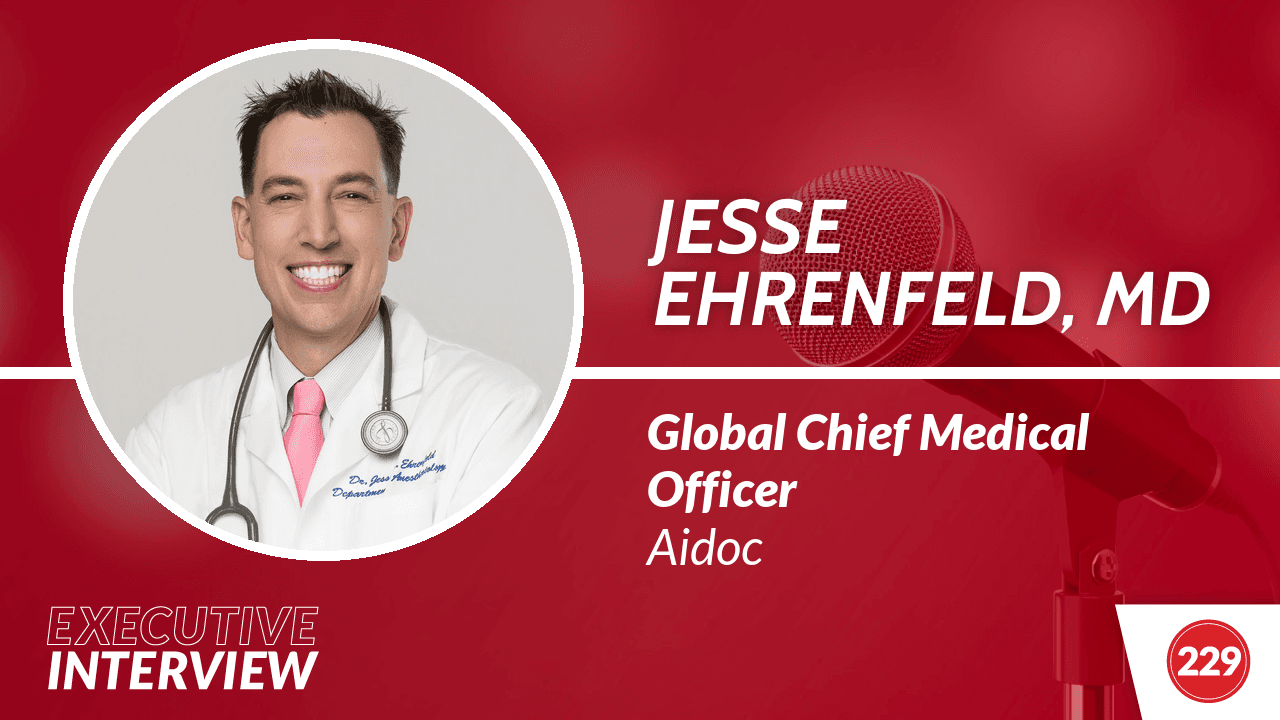
with Jesse Ehrenfeld, MD
Dr. Jesse Ehrenfeld spent years at the American Medical Association pushing back on companies that didn't understand how clinicians work. Now he is Global Chief Medical Officer at Aidoc, a company building the tools, and he still puts on scrubs at least a couple of days a month. His line on clinical AI is short: "AI should surface the information that's critical to the diagnostic process, but the clinician, that's me, I'm making the decision."
Jesse calls regulation "a design principle, not obstacle," and treats FDA clearance as a health system's signal that a tool's performance was independently validated. Clearance is where trust starts. After go-live, a scanner change or a software update can shift how that tool performs, so who is watching when it does?
Guest: Dr. Jesse Ehrenfeld, Global Chief Medical Officer, Aidoc
Host: Bill Russell, Founder and CEO, The 229Project
Chapters
0:00 From the AMA to Aidoc
2:27 Detection Is the Starting Point
5:43 What Technology Leaders Miss About Physician Trust
7:30 When Findings Outrun Capacity
9:41 Aidoc
10:06 Where the Clinician Decides
12:07 A New Layer of Healthcare Technology
14:40 AI as a Second Set of Eyes
16:54 Three Binders and a Navy Medical Record
LinkedIn: https://www.linkedin.com/company/229proj/
Donate: Alex's Lemonade Stand: Foundation for Childhood Cancer
https://www.alexslemonade.org/mypage/3173454
Executive Interview: Bill Russell with Dr. Jesse Ehrenfeld, Global Chief Medical Officer, Aidoc
Transcript, clock: with-ad v2 final and podcast MP3s (19:22.64). faster-whisper small.en, speakers from isolated Zoom tracks, names corrected. Airs Wed Nov 25, 2026.
[00:05] Bill Russell: All right, today we have an executive interview. I am excited to be joined by Dr. Jesse Ehrenfeld, Chief Medical Officer at Aidoc and past president of the American Medical Association. Jesse, welcome to the show.
[00:20] Jesse Ehrenfeld: Yeah, thanks for having me.
[00:24] Bill Russell: So it's interesting to look at those two things, past president of the American Medical Association. So, you represented doctors and tried to make their voice heard and bring them together, and now you're with Aidoc.
[00:41] Bill Russell: The intersection is pretty interesting right now because I'm not sure I know of anything else that's from a technology perspective that's impacting physicians as much as AI. And it's going to be an interesting conversation to hear how are clinicians viewing AI, how are they experiencing AI, and how are your conversations going around that?
[01:05] Jesse Ehrenfeld: Yeah, it's an exciting moment. It's been an amazing journey for me to go from deep policy work, national impact at scale with the AMA, to a company that is building tools and delivering care around the globe. You know, we're Aidoc's in 21 countries. You know, we see something like 20 million scans a month, 2,000 hospitals. It is wild. And so, for me, both roles, you know, have incredible impact, but in very different kinds of ways. And this is an AI moment. We all know that. We all are living that. We're all experiencing that. I think there's a lot of anxiety about the role of physicians and nurses and other clinicians in the future and what the healthcare system is going to evolve into. I think there's also a lot of excitement. The healthcare system struggles. It is complicated. It is fragmented. Patients often do not get what they need when they need it because of access, capacity, cost, all of the things that we know we continue to struggle with here in America and abroad.
[02:11] Jesse Ehrenfeld: So to be at the intersection of all that with my policy background at the AMA and now at a company that is actively rolling up our collective sleeves to get these products shipped to make things easier for clinicians. It's been a lot of fun.
[02:27] Bill Russell: So we travel the country, we did about 70 events this year, talk to people. Aidoc just comes up a fair amount because when you ask, where are you using it? Ambient AI, ambient listening is the first and they go, oh yeah, that's table
[02:39] Jesse Ehrenfeld: stakes at
[02:40] Bill Russell: this
[02:40] Jesse Ehrenfeld: point.
[02:40] Bill Russell: And then what happens is people start talking about imaging because imaging is really the grandfather of AI in healthcare, it's been around for a while. But it's not of, it's no longer about detecting things. It's very good at detecting and finding things. It's about operationalizing the technology. It's finding things that we can't necessarily respond to as health systems.
[03:09] Jesse Ehrenfeld: And I'll tell you, Aidoc's been around for 10 years and the algorithms are foundational. They're important. We've got more FDA clearances in the space, 30, 40 plus, whatever the number happens to be. But that's the starting point. And just because you detect, find, identify something wrong, if that doesn't get plugged into the care system, if that doesn't impact the patient journey, if that doesn't actually land in somebody's lap at the right moment so they can do something with that finding, with that interaction, then it's like, what's the point? And so, you know, every health system that we go into, we do these, you know, implementation paloozas where, I mean, you know, you order a bunch of pizza, you get all the people around the table and you figure out like, okay, great. So we're gonna have this insight that, you know, this patient has an acute stroke, then what happens? You know, who gets the page, who gets the alert, how does the stroke team get activated? How does the OR team that's gonna do the mechanical thrombectomy, you know, know that they need to show up and be ready to receive this, you know, patient, you know, moments later?
[04:15] Jesse Ehrenfeld: All of those things actually matter just as much as the algorithm itself. And, you know, we're very proud of, you know, our deep experience doing that. And we think we've learned a lot over 10 years, which is why we've been able to bring a lot of value to the systems that we deploy in.
[04:32] Bill Russell: Yeah, it's, you know, some of the conversations, some of the success stories we've heard, you know, at health systems, they're doing these reads and they can't get to all of them. So the technology doing the reads will actually move the critical reads to the front of the line. And it's interesting because, you know, I'm talking to physicians and they're like, you we're not going to attribute a saved life to it because we can't really attribute it. We're pretty sure we saved lives with this workflow, with this process.
[05:08] Jesse Ehrenfeld: We've heard incredible stories about the patient who was a little short of breath in the ED, had a scan, and they found something markedly different that was unexpected that changed the course of that patient's journey. We hear those those stories all the time, weekly, if not, if not daily. So yes, hard to quantify the exact impact. But from from my lens, it's, it's incredibly important work, it's meaningful work. And at the end of the day, we're very proud of obviously what we've been able to do.
[05:43] Bill Russell: So you've represented physicians at the at the highest level through the AMA. What do technology leaders maybe misunderstand about how physicians adopt and trust new technology?
[06:00] Jesse Ehrenfeld: Well, look, I think at the end of the day, and I spent a lot of time at the AMA, beating up on companies that didn't really have an understanding of our workflows. And there's a disconnect between what they were building, what they were developing, what they're trying to deploy, and actually the needs of the end user, whether that's the clinician or the patient. And I'll give you an example. I was at a health tech meeting. This was probably 10 years ago. And this really excited entrepreneur came up to me. He was like, Dr. Ehrenfeld, Dr. Ehrenfeld, we have this algorithm, and it will tell you if the patient has colon cancer and if you have to do a colectomy. I said, OK, great. How does it work? Well, it's a black box neural network. We can't really tell, but it's very accurate. And I said, OK, what patient is going to say, sure, sign me up for a colon removal based on a black box algorithm. Okay. What surgeon is going to operate and what third party payer is going to pay for the surgery. There's just a complete disconnect between the understanding of the healthcare system and the development of that particular tool.
[07:08] Jesse Ehrenfeld: So, you know, there are companies that, you know, get it and live it and understand it. I still see patients and I put on scrubs at least a couple days a month because that's the only way that I really understand what's happening in American healthcare is by talking to my colleagues, delivering the care myself and hearing from my patients what they are actually experiencing.
[07:30] Bill Russell: The AI is bringing an abundance of knowledge that we have never experienced, like we could just turn it on. One of the case studies I heard as I was going around the country is, yeah, they turned on and then they did all these reads going back a number of years. They started with one year and then went back a number of years. They found so many actionable findings that they were like, oh my gosh, well, the knowledge is there. The algorithms are there. It can do all these things. It's almost going back to the last conversation. And then they found it's like, well, we're going to turn this off because we're going to limit what it can actually do because we can't respond to this new reality that we've sort of created for ourselves where we can do these kinds of things. When I asked them about how do you feel about the technology now that you've had this experience, they're like, look, the problem isn't the technology. The technology is amazing.
[08:31] Bill Russell: Like, it's amazing what it found. It's like, we wanna figure out how to integrate it at the front end, so we don't have this kind of backlog of actionable findings when we start to look historically at the images. I mean, are we seeing that more like it's just, it's starting to get baked in that we're not gonna have as many things fall through the cracks?
[08:53] Jesse Ehrenfeld: Yeah, so systems are, I think, struggling to figure out how to do the technology integration with the existing capacity constraints that they've got. And I really believe that AI is going to be an expansion opportunity for how we deliver care. And we have to do it, Bill. Look, we could double medical school enrollment tomorrow. We could triple nursing school and PA school. We would not solve the capacity constraints that we're under because we just don't have enough human labor to deliver care the way that we've designed the system. So now the hard work is how do we re-engineer the system? And part of that is using these administrative tools and ambient dictation and voice agents to do phone calls, to think about how do we reorganize the delivery journey so that patients can actually get what they need.
[09:41] Announcer: All right, we're going to take a quick break. Here's a word from our sponsor.
[09:46] Bill Russell: Imaging is only useful if it leads to action. Aidoc turns imaging into action by flagging critical findings, prioritizing urgent cases, and mobilizing the right care team fast. Fewer missed diagnoses, more access to care. Find out more at aidoc.com.
[10:04] Announcer: All right, let's get back to the show.
[10:06] Bill Russell: I do want to talk about the clinical AI operating system, but this conversation generally comes back to a conversation around AI is very capable, and where do we draw the line between supporting clinical decisions and AI actually making clinical decisions?
[10:30] Jesse Ehrenfeld: Well, it comes down to this question of how do we deliver responsible clinical AI. And for me, the line is pretty clear. You know, AI should surface the information that's critical to the diagnostic process, but the clinician, that's me, I'm making the decision. And for us, the foundation of trust starts at the highest degree of regulatory validation. So again, that goes back to the FDA clearances that we have, we've got the most in the space. And when I think about, you know, I spend a lot of time in D.C., I live in D.C., talking with FDA and regulators. Regulation is a design principle, not obstacle. And FDA clearance, in our experience, is a signal to a health system that the performance has been independently validated, and that's really, really important because it tells, you know, me as a clinician that after go-live, I have some confidence that this tool actually is performing as expected. Now you can't stop there. You have to have ongoing monitoring. You have to understand, you know, when the workflow changes, when the real world performance may not line up with what you expected.
[11:34] Jesse Ehrenfeld: And there are lots of reasons that happens. It's often not about the algorithm, it's about, you know, the scanner change or a software update or some other thing that is sort of in that process that impacts the care journey, but not the algorithm specifically. So we have a huge AI operation center, more than 60 engineers, data sciences, DBAs, all they do, site by site, algorithm by algorithm is monitor the performance over time because things do shift and we have to be able to identify that as it's happening to make sure that these models are performing.
[12:07] Bill Russell: So Aidoc is building what it calls a clinical AI operating system. This is a layer connecting imaging, in clinical intelligence, the EHR.
[12:19] Bill Russell: Are we watching in real time the emergency, or I'm sorry, the emergence of an entirely new layer of healthcare technology and architecture? I mean, I've had several conversations just this week of people saying, is the AI gonna be embedded in each one of these systems, or is the AI going to exist outside of all these systems and press into all these systems and pull it together and create intelligence based on all of these systems and almost be a, you know, not embed, like right now we're experiencing, they're embedding it in the EHR, they're embedding it in the ERP, they're embedding it in, and that seems to be a model
[13:09] Bill Russell: that's going to lead us to a path where we're going to want to bring this intelligence into a central layer.
[13:17] Jesse Ehrenfeld: Yeah, I mean, at the end of the day, we have to have a platform approach. There's just no way from a technology standpoint that we could ever keep up with the implementation efforts that it requires to bring these tools online. So Aidoc is set up as a platform. We have our own solutions. We're very proud of those solutions that we've gone through clearance, we've developed models, foundation models, all those kinds of things. But we also have third parties that we have confidence in, that we work with, that we have validated and bring onto our platform. And from a CIO or CIO's perspective, the reason that's really important is because once we're live, you know, they can pick and choose whatever they want off the menu, right? There's obviously work to do around implementation. But, you know, all of the things to connect the data streams and do the hard work of actually bringing these tools to the clinician. Once you've done it once with our platform, it's very straightforward to do it for anything else that we offer. There's no way to do this at scale without a platform approach.
[14:19] Jesse Ehrenfeld: Now, where does that platform live? How does it connect? What's the future of all this with with clinical agents interacting across different systems, that it hurts my brain a little bit to think about what that reality might look like, but I think we're gonna see a lot of movement in the coming months and years.
[14:40] Bill Russell: Speaking of the coming months and years, when you project out, what's something physicians will do routinely with AI, maybe that they aren't doing today?
[14:52] Jesse Ehrenfeld: You know, the thing that I love about what AI can do is it's so powerful at synthesizing huge amounts of information. And look, I'm a pretty sophisticated electronic health record user, been practicing for 20 plus years. I have an informatics, you know, background training, fellowship, all the things work in health tech. And a little while back, I was seeing a patient and doing my pre-op visit, it's cardiac surgery, and got everything I need. I go to walk out of the room, and the patient says, doctor, one more thing. And I said, what is it? And she goes, well, I just don't want the last time to happen this time. And I said, okay, tell me more. What happened last time? She goes, well, they told me I had a cardiac arrest in the recovery room. They said, yeah, I don't want that to happen either. That doesn't sound good. So you talked about it. And I went back in the record, and I found the only place that anything was documented related to this event was in a PACU nursing note.
[15:58] Jesse Ehrenfeld: And I'll be honest, Bill, I almost never open or read a PACU nursing note. It's just not something that's a part of my workflow or where I would expect to find a significant important finding that changes my care plan entirely. But if you imagine a chart summarization AI tool that can look at the entire record and find absolutely everything that is critically important for me to know based on the context of what's happening in that care clinical setting can be an incredibly powerful tool. So I expect that we will very quickly get to a place where AI is acting as a second set of eyes across almost every clinical encounter, whether that's in primary care, in acute care environments like where I work, whether that's supporting the analysis of images or just doing sort of the high-level, you know, chart extraction work. I think that future is coming quickly.
[16:54] Bill Russell: That's an exciting future. I remember sitting in a room with a patient, with a woman who's actually, she wasn't the patient, her daughter was a patient, and she had these binders. And I said, if you don't mind me asking, what are those binders? She goes, we go to a lot of different health systems. It's a, you know, it was a chronic condition, child, a lot of specialists and whatnot. And she goes, the record, at that point, it was 20, it was close to nine years ago, the medical record wasn't moving, so she would print everything out and put it into these, she had three binders, they're massive. And I mean, I encouraged her and whatnot, but when I left there, I thought, gosh, what doctor's gonna read all three of those binders? And be ready, but that's what AI does exceptionally well.
[17:39] Jesse Ehrenfeld: Yeah. By the way, when I did 10 years in the Navy, served in medical corps, overseas, Afghanistan, all stuff. The single most important thing that I carried with me on the C-17 flying in country was my medical record, my Navy medical record. And you carried it duty station to duty station deployment back home because the system weren't reliable. It was critically important information. And that was obviously a very precious thing that, you know, was right there alongside, you know, the other stuff that I kept in my go bag.
[18:16] Bill Russell: You had it on you at all times.
[18:19] Jesse Ehrenfeld: I mean, it was in my barracks, most of deployment or unless I was doing something in the clinic, but but but yeah, literally physically carry it with you. Station to station.
[18:29] Bill Russell: Jesse, I want to I want to thank you for your service. Thank you for your time as well. I appreciate the the experience. This is an interesting time to be in healthcare and it's an interesting time to be in technology and the convergence. I'm glad someone with your background and really representing physicians and now really looking at the intersection and how technology can be brought to bear. I appreciate that there's people like you doing that, not just the technologists leading in the way, or the clinician saying, no, I loved paper, I had those conversations too. I loved paper, those were the good old days. We are gonna make progress, but hopefully we'll make it at the right pace and with the right outcomes.
[19:14] Jesse Ehrenfeld: Absolutely, well, thanks for the conversation, appreciate it.
[19:16] Bill Russell: Thank you.
Keep exploring
Executive Interview · Nov 18
Executive Interview · 17 min listen
Executive Interview · 19 min listen
Executive Interview · 26 min listen
Executive Interview · 17 min listen