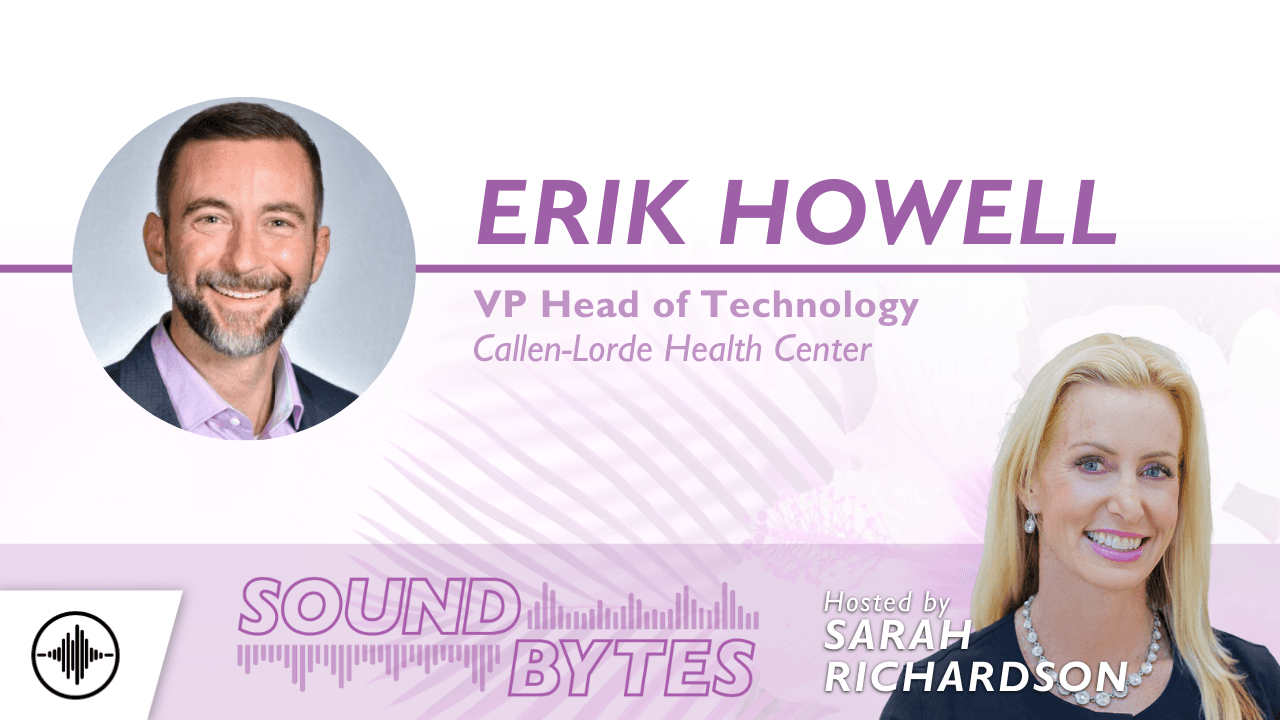
Flourish Sound Bytes: Stepping Away to Step Forward - Lessons From Sabbatical with Erik Howell
 Apple Podcasts
Paused
Flourish Sound Bytes: Stepping Away to Step Forward - Lessons From Sabbatical with Erik HowellFlourish Soundbytes
Questions Answered in This Episode
- What separates successful healthcare transformations from the ones that fail?
- How much planning is actually enough before a major EHR implementation?
- Why do most organizations struggle to focus on one transformation at a time?
- What makes the ADKAR change management framework different from typical change control?
- What did working inside a software startup teach about scaling healthcare solutions?
About This Episode
October 30, 2025: After 25 years leading transformational change in healthcare IT, Erik Howell, VP and Head of Technology at Callen-Lorde Community Health Center, made an unconventional decision that most leaders only dream about: he took a sabbatical. Following major EHR implementations, enterprise PMO leadership, and scaling a Silicon Valley AI startup's delivery team, Erik stepped away to travel, reflect, and rediscover what truly mattered in his career. The result? A complete reframing of success, renewed energy, and a mission-driven role leading technology at an LGBTQ-focused community health center in New York City. Join as Erik shares the lessons from his intentional career pause and why stepping away might be the secret to stepping forward with clarity and purpose.
Key Points:
- 07:08 Erik's Pivot to a Silicon Valley Startup
- 12:46 Lessons from the Sabbatical
- 19:23 Finding the Right Career Fit
- 25:26 Speed Round and Final Thoughts
Donate: Alex’s Lemonade Stand: Foundation for Childhood Cancer

Transcript
This transcription is provided by artificial intelligence. We believe in technology but understand that even the smartest robots can sometimes get speech recognition wrong. Flourish Sound Bytes: Stepping Away to Step Forward - Lessons From Sabbatical with Erik Howell [00:00:00] Sarah Richardson: I'm Sarah Richardson, a principal here at this week Health where our mission is healthcare transformation, powered by community. This is Flourish Soundbites, unfiltered Conversations with healthcare leaders. Let's get real, Welcome back to Flourish. I am Sarah Richardson and today's soundbite features a seasoned and purpose driven leader, Erik Howell. With 25 years of experience leading transformational change in healthcare, Erik has done it all from EHR implementations and guiding multimillion dollar enterprise projects as a consultant to working for a Silicon Valley AI software startup to scale its delivery and client success teams. But Erik's story takes a unique turn. He intentionally stepped away from his career for a sabbatical, something many leaders dream of, but few actually do. He returned with renewed energy perspective and alignment to his values. Today we're gonna talk about that journey, the lessons he's bringing back into healthcare innovation, and why stepping away [00:01:00] may just be the secret to stepping forward. Erik, welcome to the show. Thank Erik Howell: you, Sarah. I love that tagline. stepping away might be the secret to stepping forward. I'm really excited to be here and I'm really looking forward to having this conversation with you today. Sarah Richardson: I am too, and for those of you listening, we wrote an article, or Erik wrote an article and I gotta throw some quotes in a while back About that sabbatical and that journey and why it was so formative. In his career. I'm gonna start by asking you about being a transformational leader, especially in the consulting space because you have led some of the most complex and large scale transformations in healthcare, EHR implementations, enterprise PMOs, and even scaling a digital startup. Looking back, what are the common threads that make these efforts succeed? Erik Howell: there are some table stakes here, like alignment with organizational strategy and having an ROI that you are confident you're going to attain. But when I look back at some of the biggest transformations I've led, the top things that come to mind are, they're not necessarily the sexiest or the most exciting to talk about, but, quality planning.[00:02:00] Is one, leadership alignment and consistent messaging. being able to have organizational focus. and I'll add a fourth one that is fun to talk about, which is change management. I love talking about change management, but starting with planning, I'm curious, Sarah, have you ever been talking about an upcoming project with someone saying that kickoff is in two or three months and the person you were talking to thought kickoff meant go live? Sarah Richardson: Oh, it's actually a common theme when you're like educating the organization about how to get stuff done. Yes. Erik Howell: It's crazy. If I had a dime for every dime that happened, I'd easily have like three or four bucks. so now I make sure to make clear, like kickoff is the start of the project after that planning phase is complete. Right? So, but like how much planning is enough? For a big transformational project, like a month, quarter, a year. it makes sense to me to think about it on a spectrum or even a graph where the cost of failure is like your y axis and the time to plan is your X axis, where on one end you have something [00:03:00] like a big SpaceX mission to Mars. That requires decades of planning because the cost of failure is just catastrophic, right? And on the other end, you have a small project, like a workflow tweak in a clinic where. It doesn't make sense to, to spend more time planning than doing the work. And in the middle sits something like a big EHR implementation, which is a big transformation for a health system. These are, they're huge. they touch almost every user in the organization. They directly impact patients and finances and, You can't plan for decades, right? and, but you also can't skip the groundwork. So the key is really balancing, the risk and cost of a bad outcome with the time and resources you invest upfront. the second thread for a successful transformation is a leadership alignment and consistent messaging. a mentor of mine shaped my thinking here when he taught me a simple but effective principle to make a message stick, which is tell people what you're gonna tell them. Tell them. Then tell them what you told them. like, think of a meeting that's effective and well run. [00:04:00] Like you start with the agenda, you deliver the content, and you close with a recap of what was discussed and the decisions made. And it feels repetitive and it, and it can get to feel boring after you're doing this for six months or a year. but politicians do it all the time with consistent messaging and taglines because it's important for us to all hear things over and in large transformations. Senior leaders need that same discipline, consistent talking points repeated across meetings and venues so that everyone in the organization hears the same steady message. and the third theme here is focus. I'm curious, Sarah, I'm sure the answer here is yes, but have you ever seen an organization try to juggle too many transformations at once? Sarah Richardson: I had that conversation with a CIO this morning. Yes. Erik Howell: and you know what, if they involve different teams, then maybe you can pull it off like construction of a new hospital and a new ERP system. Like arguably there's overlap there and, but perhaps that's manageable overlap. But organizations can't do everything at once. there's only so many transformational projects you can take [00:05:00] on. leaders have to protect that focus. and so if you're implementing a new a HR many times that has to be the transformation for that season. none of our CEOs like, like to hear this, but trying to do too much at once, just spreads the organization too. Then, Finally last, but, my most favorite to talk about is change management, which is very distinct from change control for any of the techie folks out there listening. and there's been a lot of lip service given to change management I think over the last five years especially. and there are many ways to do it. I'm a big believer in the Prosci Acar model. A-D-K-A-R stands for awareness, desire knowledge, ability, reinforcement, and it's a framework that forces you to think about how you'll take each of your stakeholder groups through those five sequential ad car steps of change. Lots of tools you can layer on top of that framework. But at the very least, when I'm doing a big transformational project, ACAR how I design communications, training, and support and even if it's applied in imperfectly, which often is the case, I [00:06:00] don't think I've ever done it perfectly. It just, it makes the difference between a thoughtful project that sticks in one that struggles. Sarah Richardson: I love that you bring up a car, because I've been such a fan of Prosci for years. I actually had a previous team, 20 people. All the EPMO and all the major leaders in it get their Prosci certification so that the conversation was a common vocabulary. and we made the investment of actually utilizing the Prosci tool set, which is not inexpensive, and yet the cost of a failed project is actually more than. And so once you get through all the, you know, ROI and return on value of making the Prosci investment, you realize, hey, you know what? We haven't had 70% of our projects fail anymore. And to your point, that conversation that's weren the CIO. Went through a major acquisition and they're like, we need to have Q1 B integration, and yet there's 50 projects on the docket that are separate from integration. I said, you know, as well as I do that Q1, if that's your integration period, it needs to be a freeze period or just a, you know, break fix only for the other stuff because you may integrate something that significantly gets [00:07:00] changed or has to be redone. Because of the other projects happening in tandem. So all your points are spot on entirely. So why pivot from consulting into a Silicon Valley healthcare startup? Erik Howell: Yeah, so I graduated from college back in 2002 with a degree in computer engineering, and I went right into consulting, working for Senon. I had always wondered what life would be like if I worked for a Silicon Valley software company at that time. I'm curious, Sarah, if, is there like a fork in your career that you wondered what would've happened if you had chosen a different path? Sarah Richardson: Well, I started in hospitality, so yeah. the only win, Erik, is that they've merged at this point in our careers because hospitality patient experience. But yeah, I left hospitality to go into healthcare back in 2000. Erik Howell: so when I graduated, Google came to my college to recruit, and at that time they had about 500 employees. And so I wondered what that would've been like. to working for a software startup was in some ways kind of scratching that 20-year-old [00:08:00] itch. also after 20 years in consulting, I was ready for a change. consulting had given me really great exposure to health systems and projects and different health tech. It started to feel like I was running some of the same plays, so I was asking myself like, what's next? I was pretty sure I wanted to stay in healthcare and technology, but I wanted a new lens on that, and the two paths I saw for me were working for a provider, which I do now, or joining a software company. So I joined NTUs, a Silicon Valley startup that's focused on machine learning and gen AI solutions for hospitals and health systems. And it's a really fantastic software company solving some of the hardest problems like reducing length of say and improving surgical access. And because they're solving some of the hardest problems, the solutions take more than just tech. More than just the software. There's a lot of people and process redesign and the transformation themes that we were just talking about. So, so my role in the company was to lead a delivery team of about 50 people, where our responsibility was [00:09:00] implementation of the solution that guided clients through adoption and achieving ROI, ongoing client success. So the health system would become a long-term partner and in many ways it was a natural extension of what I did and learned in consulting. Sarah Richardson: What did you learn from the experience of working in a software startup? Because we still hear about startups and new innovation all the time, and quite honestly, all these point solutions are hitting CIOs at a pace faster than ever. So how are you not only taking that experience, but also balancing that in your new role? Erik Howell: I'm so glad that I got the experience to see what it's like to be inside of a software company. It was fascinating. and. A great experience and a lot of my consulting skills and experience transferred. So if anyone else is interested in a similar pivot, know that it can be done. one thing that was really interesting was the internal dynamics of the organization. So in consulting, most of us had similar roles just at different levels. Staff, consultant, senior consultant, and so on. we sold work. We delivered work and successful. Pretty straightforward. Like I was the sales delivery and solution builder of [00:10:00] a product in a way, in consulting, but in a software company, the roles are distinct and often competing. So the sales team is pushing for new features that they can sell to new clients. the implementation team is making sure that promise. From sales can and are delivered. The client success team wants, improvements for the base client, base for existing customers, and then engineering. There's always some tech debt and engineering always wants time in the roadmap to reduce that tech debt and product is in the middle. Of navigating these priorities and all these tough calls and it's this really fascinating push and pull in the organization that I didn't have, I didn't see in consulting, being in the provider space, I see a little bit of it, but it really was quite a unique environment to be in. I am. I'm curious if you've seen that in some of your leadership roles in orgs you've been in with competing priorities in the organization itself. Sarah Richardson: That on top of being a product development, software development organization, which was my most previous role. Some making sure that all those people have the same philosophy [00:11:00] about how to get those things done. So you get out of a build trap, as they call it. Is really key. Erik Howell: Yes. Yeah. Yeah. and I would say, the company that I worked for did a great job of that. And so it becomes this healthy tension within the organization when it's done well. but early on I was primarily advocating for my team, and that was a mistake. o over time, I learned to raise my perspective and to help balance priorities across the whole company. the other big lesson I learned that was fascinating, and now when I see software companies do it well, I just, I think it's brilliant. Is, the importance of scalability and how a software or scales, and how ultimately you wanna lean less on delivery and build it more into the solution itself. so in, in consulting, if you need more capacity, you can bring on contractors within weeks and sometimes even pass that cost to the client. software companies usually don't have that lever to pull as easily, so we had to desire, decide. Do we hire from my delivery team based on the sales pipeline, or do [00:12:00] we wait And more importantly, like can, and how do we support more clients without adding headcount by improving processes or improving the software itself to do some of delivery's function like onboarding and like user adoption. So efficiency mattered in a way that was different than I had experienced before. because like the goal over time with SaaS is for your delivery function to shrink as a percentage of your revenue. And that was one of the goals that I had. I loved the team that I built there and the experience that I had. and a little ironically, part of the reason my role was eliminated there, in addition to summary restructuring, was because I had built such a strong team that didn't need me as much as they did when I began there. Sarah Richardson: But you didn't take that downsizing as a failure on your part. You actually pivoted and made that a midlife career break so you could travel, reflect and recharge. I'm sure there was a little bit of a soul searching and the different pieces that had happened, for sure. But it was a bold decision in the middle of such a successful [00:13:00] career. What led you to make that choice? Erik Howell: Well, I'd be lying if I didn't admit that it didn't feel like failure at the time. before we go into some of that, I would like to talk about how leaders frame Some of depart their departures. So, so when my role was eliminated, this is just an interesting topic that I'm interested in other leaders' perspectives on. I would love to talk more about it with folks, but I have a choice of how to frame it. and you know, many leaders take the option to say they resigned, which makes the exit seem voluntary, when maybe in reality it wasn't. And it, I think individuals departing do this so. They aren't viewed as a failure. And I think companies decide to do this so the remaining employees don't worry about instability. So it allows both sides in a way, kind of the department leader and the company to save face. I'm interested if you've ever struggled with that or noticed other legal leaders struggle with that, Sarah, about how to talk about career transitions like that. Sarah Richardson: Oh, I was fired from an organization after I'd been recruited and for a long time, I said exactly that. We agreed to disagree. [00:14:00] We agreed on a mutual split. End of the day, not really, it was just a bad cultural fit, and I didn't ask the right questions going into the organization, and I wasn't who they wanted and vice versa. So years later, I almost wear that badge of honor, but it took me a long time to get to a place where I could say, yes, I got fired. Erik Howell: Yeah, and there was definitely. A week where I really struggled with it. but it wasn't a resignation, so it didn't feel authentic to frame it that way. So I ultimately told my team, my colleagues, my friends, and my family, that my role was eliminated and I'll always be immensely grateful to the company for the runway they gave me at the end as well. Allowed me in part to do the sabbatical and the way they allowed me to depart with a lot of integrity. I'm really grateful for. But it was really tough. in some ways I felt like a failure. I had tied my identity to career success to climbing the ladder and being proud of the companies I worked for. And suddenly the company was saying it didn't need me, and that was really hard. I was tempted to update my resume immediately, and [00:15:00] not do the sabbatical. But I was also really burned out. I had been sprinting for years and I was always thinking if I just pushed a little harder, I'll make it to the finish line, but my endurance was gone. I was gassed. so being burned out like that along with some lovely timing in my personal life, gave me, an opening for the concept of this sabbatical. my husband and I were already living nomadically, we were moving month to month in Airbnbs across the US due to being able to work remotely. And, we had a little bit of savings and so we thought, why not pull a few months of retirement forward, keep traveling, but take it internationally and turn this into an intentional sabbatical period of 6, 9, 12 months. Unsure exactly how long it would be. that's what led to the decision. Sarah Richardson: And I love, like I remember chatting with you while you were still on sabbatical and I'm like, can I come join you in Mexico right now? I was like, I always think about, so where in Erik and Chad today, like I get to go hang out and do the same thing. Because in your article you [00:16:00] shared how that sabbatical shaped your next chapter. So what were the biggest lessons learned, Erik, that shifted your perspective? Erik Howell: Yeah, it was really uncomfortable at first. I had equated so much of my worth. With productivity and suddenly I didn't have deadlines. I didn't have deliverables. So one important lesson was detachment from work and a work identity. I always thought of myself as like really loyal to many of the places I worked, and I really overly identified with my job. it's a hard habit to break and easy to slip back into actually. So I love that we're having this discussion today to remind me of some of my lessons from my sabbatical, which wasn't that long ago. The truth is companies have to make hard business decisions all the time, either because of tough financial times or a shift in focus, or to optimize in a different way. So I needed to create more mental separation space, more energetic separation between myself and my job. and I learned what it looks like for my career to not define me. Another lesson was [00:17:00] balance and time for fun. so my husband and I finally took the honeymoon we never had because I'd been working too much. We made incredible memories together. I got to share some of those with you as we were going to places. I couldn't recommend more highly Mexico City and Myorca. I could do a whole podcast on those if people wanna talk about like some of the travel adventures we did. but those months together really gave us stories and experiences that will carry forever. Another one that I wasn't sure about. I felt that I wanted to stay in this space of healthcare technology, but I wasn't sure and taking a step. Away from it really reaffirmed that I do love this space. because even when I wasn't working, I found myself listening to this week, health and other podcasts like it, and reading about AI in healthcare. And it didn't feel like pressure to do that, like I was keeping up on the latest thing. Like it was fun to participate in those conversations, or to hear those conversations. so it reminded me this is the field that I wanna keep contributing to. And finally, and maybe most importantly for me, [00:18:00] I reframed retirement and what I used to perceive as the importance of it. I used to think I wanna get there as fast as possible, retire by 50 or 55, make as much money as I could, stock it away in order to do that. but after three months of rest, I realized I was ready to work again. Like I wanted to use my brain, I wanted to solve problems, I wanted to contribute. I think humans are wired that way, or at least this human is like, I like to make progress and I like to add value. And doing that from a place of total financial freedom sure would be nice. But I, I also know now that like when I do retire, I'm not gonna be the type that just wants to sit on a beach. it's just not me. So working up until Medicare eligibility doesn't sound as bad as it used to. And because of that, it really impacted what my next career. Choice would be I didn't need to maximize income at all costs. That I could actually find a role that felt like it aligned, with purpose and things that mattered more than just income. Sarah Richardson: So if [00:19:00] Medicare gets moved to 70 or later, you're gonna throw in those extra five years or you totally cool with planning for that 65 year Erik Howell: window. We will see. I'm 45 at the moment, so I feel like I still have a little bit of runway to figure all of that out, but, I hope it stays at 65. Sarah Richardson: Yeah, same. Because that means I'm only 14 years away, so I'm a few steps ahead of you for sure. But now you've reentered the workforce in a mission focus role aligned with your values. How did you know it was the right fit? Erik Howell: so during my sabbatical, I used a framework called the Flower Exercise, and it's from a book called, what Color is Your Parachute? the book is. Fine. I like, I didn't read it from start to finish. I'm not sure that I'd recommend that, but that particular flower exercise is fantastic for figuring out. the type of role, the type of organization that aligns with what you want to do next. I also asked myself if my career ended today, what would be missing from my biography? If I were to go back and write right now what I want it to be like at the end of my career? What's not in there [00:20:00] yet? for me, the missing piece was clear. Like I decided that I wanted to work within a provider organization. I wanted to be in a CIO or transformation type role in a provider organization, and one that was doing good. Specifically, I wanted to be in one that focused on serving the LGBTQ plus community, so that really became my focus there are about 10 community health center FQHCs in the US that, that fit that description. I stalked every one of them. I researched their boards and leaders. I learned about their challenges and strategies, and I imagine where I could add value. I LinkedIn stalked. I friend of friend stalked, I knocked on the doors of CEOs and COOs to introduce myself. Be like, Hey, I'm Erik. You got 15 minutes. Just get on your calendar and say hello. So I was really very laser focused on this one healthcare segment for three months. and. I don't know. Like I'm, I'm interested if others have found that narrowing a focus like this makes a search more successful, or if [00:21:00] casting a wide net makes it more successful. I'm not sure if you have, experience on that, Sarah. Sarah Richardson: I believe, Erik, to your point, it depends on the level of awareness and intentionality because you had the finances to be able to be selective, and sometimes people get to that point where they just need to pay their bills. And so I would recommend to people have six months savings in the bank because you never know what may happen and when you aren't worried about literally keeping the lights on at home, you can be a bit more strategic about what you choose to do next. Erik Howell: I love that. I, so I gave myself that three month runway to land a role at one of those 10 orgs. and I had a plan that if I didn't land that after three months, then I'd widen the lens to other types of healthcare providers that I, I thought were doing good. And then after that, perhaps widened the lens further, I was also open to doing some contracting work to extend my runway along the way. Because I couldn't, like you said, I couldn't make not making income last forever. but ultimately I didn't have to do those things. And maybe I got lucky. maybe it [00:22:00] was that clarity of focus, but I landed the role at the Dream company that I was looking for. So, today I'm, vice president head of technology at Calvin Lorde Community Health Center here in New York City. we focus on providing culturally competent care to New York City's LGBTQ plus community, and we really pride ourselves on providing the gold standard of that care. we don't have a CIO or CIDO position here, so that's effectively the role I'm playing where applications, innovation, data analytics and infrastructure operations all report up to me. and I'm just so grateful that I get to apply my skills and experience in a provider organization that I believe in so deeply. And, align technology and transformation to, to support that mission. and one more thing that made it crystal clear that I was in the right place. The first all staff meeting that I attended was MCed by a couple of drag queens complete with lip sync performances. So it was like, yep, folks here are fun, creative, they're safe to show up in a way that makes them shine. Like I found the right spot. Sarah Richardson: Oh my gosh. I totally wait. How often do you have those meetings? [00:23:00] Erik Howell: Every six Sarah Richardson: months. Erik Howell: Oh. Sarah Richardson: I'm gonna like find a reason to attend. I'm like, I'm just Here to have a good time just here to watch. I'm like, can they do love Cats by the Cure? I would be like, oh my gosh, I'll put in a special request. We'll make it background. Okay. I'm like, I want that song, to be what's performed. I absolutely love that. So what advice would you give to leaders who may feel stuck and are afraid of stepping away? Erik Howell: I'd say listen to that discomfort and fear. It's, it's pointing to growth. This is my first podcast interview and I've been nervous as heck to do this, but that discomfort to me means there's an opportunity for growth. And in the case of stepping away, as we said earlier, it doesn't mean falling behind. I think sometimes the most important career move is to pause. Recalibrate and then reenter with clarity. and be intentional. Like whatever space that you can create, ask yourself some hard questions like, what would my biography look like if my career ended today? Or what kind of organization and impeccably matters to me? that clarity will turn your next move [00:24:00] into the right fit, but also just take some space to have fun. Life is too short. Sarah Richardson: It absolutely is, and I'm so grateful that you shared that perspective with the audience because I don't believe anybody listening would ascertain this is your first podcast, and so kudos to you for really taking to heart the opportunity to not only share your journey, but you know, it also helps when you have a friendship that's already established, and I'm just grateful to you as well because you've expanded things that I wasn't aware of. I didn't know there were 10 FQHCs that were specific to the L-G-B-T-Q community and I live in Northern California. And we have several opportunities here in this part of the country. So I'm grateful that there's always a safe place for people to go to get their healthcare and that people are seen and hurt and valued. And I love that you are now in an organization where you get to bring all of the best things together for your life and for your profession. And I bet there's not as much of a, Division of your identity through what you serve at home, what you serve at work, even though you are still very [00:25:00] respectful of the fact that at the end of the day it's okay to close the laptop. Erik Howell: Yes. I mean, I still work my ooie off. Yeah. I care very deeply about the role that I play in the organization. and I can respect a little bit more work life balance than I had, in previous roles. Sarah Richardson: And it's time for speed round. Erik, are you ready? Okay, I'm ready. All right. One leadership trait you believe is most underrated, Erik Howell: quiet, steadiness. it's not flashy. It doesn't grab attention, but it builds trust. And, in times of change, which my organization is experiencing a lot of right now, people look for consistency. Sarah Richardson: They do. And you and I have chatted about more than charisma. So you can be as charming as you need to be at the end of the day. You still have to be able to deliver. All right. Book, podcast, or resource that inspired you during your sabbatical, Erik Howell: I'm gonna give you a few. This is not, just because I'm on this podcast, but this week Health, [00:26:00] absolutely. It reminded me I still love this space and I appreciate all the content that you Bill and directs are putting out there. so, my husband loves celebrity autobiographies, and during our road travels, we spent a lot of time in the car and we listened to a bunch read by celebrities themselves. I love them. they remind me that even these folks that we put on pedestals, they have some of the same challenges and delights that we do because we really are all the same. two, I'd recommend Barbara Streisand and Elvira are both so, so good. Barbara talks a ton about food and good company and it's really funny and connecting to think that a scoop of ice cream or planning what's for dinner can be the highlight of Barbara's day. Just like give you the highlight of mine. Mm-hmm. There's one more. there's a novel that I read, that really reminded me to pause, to be outside, to connect with nature, and to expand. Let's get, when I get stuck in my head. there's a gorgeous novel called, prodigal Summer by, Barbara King Solver. And I read that one while Myka and, um, it, uh, [00:27:00] really brought me back to a center. Sarah Richardson: Yeah, she's amazing. Have you run deep in copperhead? Not yet. I'll just send it to you because I have it on my shelf. I'd love to share books. I mail them out all the time and I have a few of her others on my shelf I need to read. She's absolutely phenomenal. And you really do become the characters. Like you have so much empathy for them and for what they're represented. So I'm glad you chose her as well. And you, If you could go back though and give your younger self one piece of career advice, what would it be? Erik Howell: Uh, to not over identify with my job because change is inevitable and, and related to that, don't lose sleep over wanting to get a gold star or fearing failure, because my ego is not my end ego. Sarah Richardson: Very powerful, Erik, thank you for sharing your story with us today. Your journey is such a powerful reminder that stepping away doesn't mean falling behind. It can mean stepping forward with clarity and with courage. For our listeners, I encourage you to check out Erik's article, midlife Recharge on LinkedIn. It's an inspiring read about how I [00:28:00] career, pause can create space for realignment and growth. Erik, thank you again. Erik Howell: Thank you, Sarah. I loved it. Sarah Richardson: that's flourish soundbites, find your community at this week, health.com/subscribe. Every healthcare leader needs a community to learn from and lean on. Share the wisdom. That's all for now.