

 Apple Podcasts

The 229 Podcast · 29 min listen
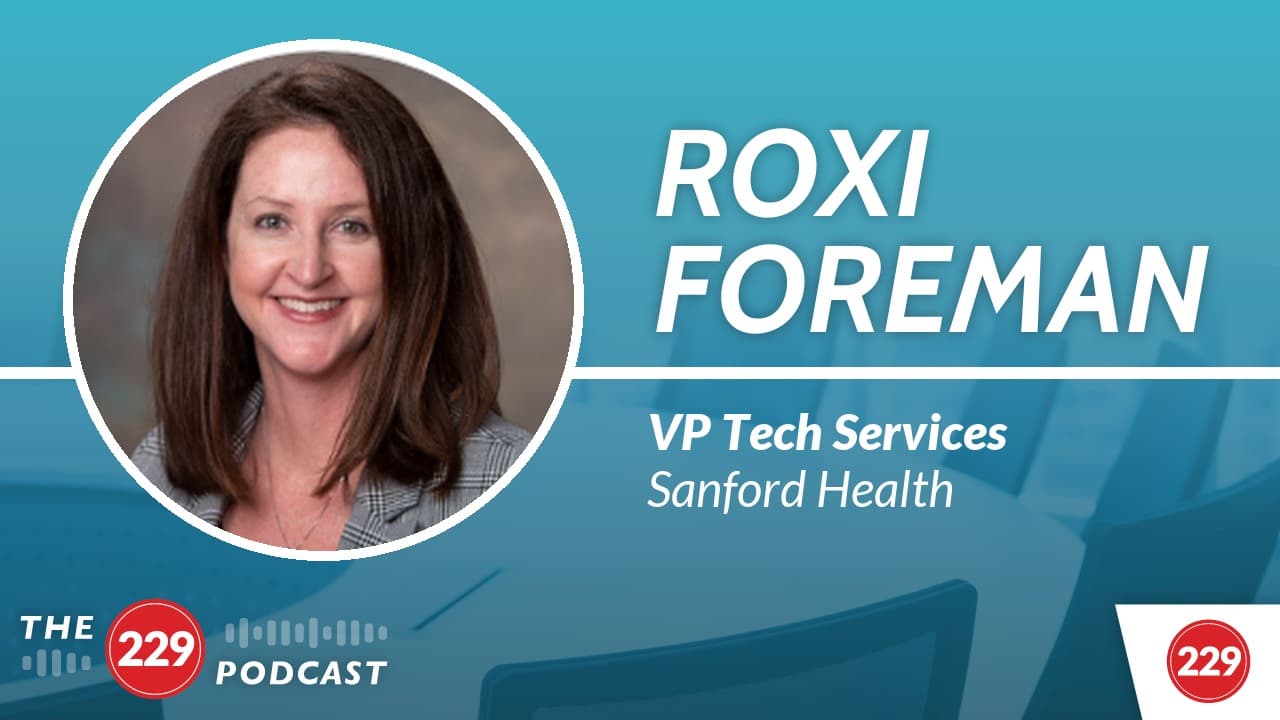
When Marshfield Clinic joined Sanford Health in January 2025, revenue cycle did not wait on the technology. Work queues had sat for a long time, so the combined team blitzed them with extra hands. Roxi Foreman, VP Tech Services at Sanford Health, calls revenue cycle a great example of shared strengths, and she runs governance as a three-footed stool: clinical, revenue cycle, and IT deciding together.
That only holds up on trust. "Every plan is intended to deviate," Roxi said, so her teams review their projects every week, and the measure of trust on a team is whether a leader will admit a goal slipped. A prior auth summit that put clinical, patient access, and tech leaders in one room proved it: "our KPIs came out better and the team came out stronger." Next, she wants patients to book care the way they book everything else, with a text, without working out which specialty they need.
Chapters:
0:00 Welcome, Roxi Foreman
1:50 From integration to shared strengths
3:28 Harmony Healthcare IT
3:59 Revenue cycle did not wait
4:59 Putting people in their strengths
6:24 Governance and the three-footed stool
8:07 Ping Identity
8:36 When the plan deviates
10:34 Trust across the aisle
12:16 Rackspace
13:04 The prior auth summit
15:44 Where patient access needs investment
18:02 Two to three years ahead
20:00 Booking care with a text
22:02 Thank you, Roxi
LinkedIn: https://www.linkedin.com/company/229p
Donate: Alex's Lemonade Stand: Foundation for Childhood Cancer
https://www.alexslemonade.org/mypage/3173454
This transcription is provided by artificial intelligence. We believe in technology but understand that even the smartest robots can sometimes get speech recognition wrong.
Shared Strengths: Roxi Foreman on Governance and Revenue Cycle
[00:00:06] Sarah: Welcome to Continuing the Conversation. I am Sarah Richardson. Today, I am joined by Roxi Foreman, VP tech services at Sanford Health. Roxi has chaired our 229 revenue cycle summits and joined our UGM meetups. Today, we're picking up those conversations to explore what health system integration teaches us about shared strengths, governance, and trust, and how those translate into revenue cycle progress and a simpler patient experience. Roxi, I am so glad you are here.
[00:00:34] Roxi: So happy to be here. It's always fun being part of the 229 stuff. It's quite the privilege.
[00:00:40] Sarah: Well, we feel the same way about having you on the show and potentially and very possibly once this episode airs, we will also be celebrating the Brewers first world series victory.
[00:00:52] Roxi: Yeah, isn't that quite the fun? I mean, this whole state is just, I think we're kind of shocked by how well our Brewers are doing, but it's been super fun to be here and watch it.
[00:01:05] Sarah: Well, as a Dodger fan, I do want you to win because if you can sweep us, you deserve to win the world series. There's my two cents experience. And before we get into the bigger stuff on your plate as well, I would love besides baseball, what's one small win that's really made you smile recently? It can be work or it can be at home.
[00:01:25] Roxi: Yeah, I mean, we've successfully completed that fall and winter sports overlap that always seems to come in October. So that's always adds that little logistical challenge when you're trying to juggle a couple of kids. So that's nice to have that behind us. And maybe we can just focus on winter now and watch the Brewers.
[00:01:46] Sarah: For sure. Yes. All right. I want to chat a bit about what it means to go from integration to shared strengths. And I've been through several, what you call mergers acquisitions, really just bringing things together. The integration piece is what sits most importantly. And Marshfield Clinic joined Sanford Health in January of 25 from where you sit. What has that combination made possible for revenue cycle performance? And how has governance helped bring the teams and their expertise together?
[00:02:14] Roxi: Yeah, I think the before we get to revenue cycle, I think just the merger itself with Marshfield and Sanford has brought forth a lot more of the confidence from the community that Marshfield is here to stay. We're viable. They were well aware of some of the financial struggles we were going through. So really seeing the community continue to see that Marshfield will be here to stay and be here to serve the community. One big, the way they showed that is our NICU serves great world class care and rural health care. It's just in a really old building and a really small facility. So they do the best they can. But through the foundation, the community was able to raise $12 million to renovate that facility. So just speaks to, they know the type of care that's given there and they want to make sure the facility shows that or represents that. So that's been a great kind of symbol of how the strength of the merger has been reflected. Revenue cycle itself, I continue to see that as a great example of shared strengths as due to an integration or due to a merger. That group did not wait, did not skip a beat to see how we could learn from each other. One big example there was we had queues sitting out there for a long time. We just needed to blitz it with extra hands. So with the shared workforce, we were able to work through a lot of things that had been sitting there for a while and we didn't wait on the technology, which is good.
[00:04:40] Sarah: And then there's the human factor also. And often you bring cultures and ideas together, you're going to have the best from both worlds. What were some of the things that got pulled together or perspectives that you saw in a different way that you were like, hey, we might being, they were the acquired entity and yet here's some pieces that we know are going to benefit from this different workflow. Where did you see some of those best synergies occur?
[00:05:03] Roxi: Yeah, as a leader going through an acquisition or merger, the team is kind of where a lot of my worries lie. And you get all those questions of what is my job going to look like? What is the crystal ball kind of questions of what does tomorrow look like? And nobody really knew the answer and we continue to evolve as an organization. We have spent a lot of time aligning the groups, aligning the teams to their strengths. Sometimes that meant they were inside technology. Sometimes it meant they went out into operations because that's where they could best serve the organization and use their strengths. I'd say most recently it's been super rewarding to see even those that were most apprehensive of where things were going, strive and really thrive in their new roles. The confidence you see in them. And I think where they are surprising themselves and some of the experiences they can bring to the table and serve a larger organization. Whether that be experienced from a different EMR or a different workflow, but they can carry forward a lot of what they learn. And it just makes the whole organization that much better.
[00:06:20] Sarah: It's always nice to look clever outside of your own universe when you get to see new ideas and new perspectives. And the thing that we resoundingly talk about everywhere we go in the country remains governance really as a topic of how you bring things together. That doesn't just sound like it's an abstract conversation. When you think about IT revenue cycle and even the clinical leaders making decisions together, what does that look like for you today?
[00:06:43] Roxi: Yeah, governance. That's such a funny word. It means a lot. Yes. And I mean, to me, government governance means a lot. But it's really just how you work together to make decisions. I think for our organization, it starts at that annual planning phase. We understand what we're looking to do as an organization and how all, we call it three-footed stool, right? Clinical revenue cycle and IT. They all have to work together cohesively in order to meet those goals. So we kind of set out to make sure that we understand what we're trying to accomplish as an organization. We and then we get a plan together and we work towards that plan. And it doesn't stop there. It's the constant feeding and reviewing of, are we hitting those goals? Are the projects that we have had in place still accomplishing what we set that out to do? Or are they doing what we wanted them to do or not? And if not, let's talk about that and let's adjust. So really just that shared decision making and how the three very different groups work together to achieve a common goal.
[00:08:37] Sarah: What's the process like for your organization when something doesn't go as planned? I mean, you've got things that jump the queue and you rearrange the priorities, totally get that. But when you have an initiative that comes through and either doesn't have the ROI or the impact or just the expectations that were established initially, do you pull the plug? Do you refine it? Like, what does it look like when things aren't, you know, rosy as you had intended?
[00:09:01] Roxi: Yeah, I think that's the key point is that they're never as rosy as you intended, right? And we knew that, you know, every plan is intended to deviate. And I think that's where you can really test how strong your team is in the culture within your team is how the teams react when those things do go go awry. I think you know how how much trust is in within a team is if they are not afraid to say, Hey, I didn't accomplish what I said I was going to or you know, the plan is off track. And that's important. If you if teams sit back and say, Oh, let's just try to figure it out on our own that way, usually waste a lot of time, where you could have if you raised it up in a safe space, you can adjust. So we do have a strong, very proud to be part of the organization that has a strong review of every week we look through what projects do we have? Are they on track? Are they not on track? Did something come in that, you know, maybe needs to trump all these other things that we said we were going to do so that continued refinement is really key to keeping everyone on the same page and being safe enough to to raise up when things aren't going well.
[00:10:20] Sarah: I've appreciated our conversations in the past where you've said we're allowed to be like this is what's not working and figure things out together. So you don't get so far down a path that it becomes more expensive or more difficult to fix. Your teams are not afraid to say these are the pieces that we need to adjust to figure things out when you lead an organization without that fear of being punitive or retribution. So much more gets accomplished. People are willing to bring the problems forward faster, but that's a level of intentionality that is constant. How do you foster that with your teams? How do you let them know that it's okay to say this isn't working and here's what we need to think about differently?
[00:10:58] Roxi: Yeah, it certainly doesn't happen overnight, right? It certainly doesn't just magically happen. You do have to be intentional about building that type of culture and to me it starts at the top. Teams know when leaders don't trust each other across the aisle, right? They know when there's as much as you try to hide it. They can see and feel when leaders aren't aligned and it takes a lot of intentionality to ensure that alignment is there. You don't always have to agree, but you have to trust one another to have the tough conversations, call each other out when there are shortcomings, and then move on and get a plan around it. So with the Marshfield integration with Sanford, a lot of change happened, right? A lot of new leaders, a lot of new people, and every time you meet somebody new or a team changes, you need to reestablish that trust and the leaders need to do it. They need to push that down to their teams and then across the aisle. So it's not a tool that you can implement by any means and it is the, I would say the secret ingredient, but something that needs to be continued to work on it and always nourish.
[00:13:05] Sarah: What's the decision that followed exactly what we've just talked about? Something got improved because IT, rev cycle, Clinical worked through a tough time together. What was a better outcome because of establishing that framework?
[00:13:22] Roxi: Yeah, we've had lots of struggles with our KPIs over the years and it has been a continued improvement. And I think the governance obviously was a key ingredient to that. One big exercise that we did across teams was we called it an innovation summit, call it a tabletop exercise, but we brought clinical leaders, revenue cycle leaders, and tech leaders that all had pieces and parts to the problem. So the problem we set out to fix was prior auth. That's not just one problem. There's a hundred problems, lots of different things that go into that, right? So we brought everybody that had even a bit of a piece to what we're trying to accomplish or solve, and we broke them up into different groups of you're going to solve the authorization portion, you're going to solve the technology portion or whichever. We chunked up the problem and we had people sitting together that don't normally sit together. We had clinical leaders, patient access leaders, and tech leaders. They all have a piece, but they usually do their piece and move on. So we had them sit together and work through the tough problem. One, it saw it built a lot of great relationships. Each side kind of learned, oh, I didn't realize you went through all of that. And everyone kind of gained a better understanding. We came out with a ton of ideas. We didn't implement all of them. Some of them we were able to get through with just some low hanging fruit. And then we grabbed the top, bigger projects that could make a really big impact. And by implementing all those things over time, our KPIs came out better and the team came out stronger. So I do love the getting people together on a focused effort like that and getting people exposed to the larger process versus just getting really good at what you need to do every day.
[00:15:18] Sarah: Well, then you get an appreciation for what it takes for the other person to get their work done as well. And you start digging into what I almost will say like long-term established protocols in an organization. And so often when you have newer eyes on it as well, there's that perspective of like, well, why do we do it that way? And then you realize like, well, we don't know because we've either always done it that way or there was some regulation at some point in the universe that caused us to have a workaround. And then you're like, we can simplify it now. There's a different aspect of it. And then I want to ask you when you've got either a rev cycle or patient access opportunity that you think deserves more investment. Because you start piecing apart, you've got prior auth, you've got denials, you've got all kinds of different pieces, but rev cycle and access. How should teams decide whether it's going to deliver value? Like how do you know to start with prior auth and move on to access, move on to different aspects of it? As you're thinking about it, what does that criteria look like?
[00:16:15] Roxi: Yeah, patient access. I mean, you've been in the industry for a long time. I won't say how many years I've been in the industry for, for, but a long time. And man, have we talked about patient access that whole time, right? And we've made improvements. I do think there's a ton of focus on that. But we're still, we still have issues. I mean, Sanford is a rural healthcare system and access is, is an art, you know, making sure that we have the right provider that can provide the right care in the right location. I know we talk a lot about, you know, type different care models, remote care models, just to make sure that they have patients have access to what they need. And we still have a long ways to go. I think a lot of that has to do with the system itself, right? We, we continue to make sure physicians panels are full, we want to run our business, we want to make sure that we can keep our doors open as a health system. But yet patients still may not get the care that they need in a timely manner and providers are leaving the industry in alarming rates. So I think there's still an element to, you know, that mom that's not quite sure how to, should I take my child in? Or are there things that an elderly patient's like, well, maybe it's not worth trying to get ahold of my doctor, that little thing, and maybe they should. So I don't have all the answers, but patient access is still certainly, you know, the term for, you know, we probably have a still have a system problem in the US and still need to work towards solving that.
[00:18:02] Sarah: When you do look two or three years ahead, what do you expect will change most when it comes to access, rev cycle? What do people need to be thinking about right now?
[00:18:14] Roxi: I hope almost everything is touched. I hope everything changes. I mean, not that you know, we've come a long ways. We have a process. We schedule, we register, we auth, we see the patient, we bill, and we get paid. I think with now that we've digitized everything, and now with all the new technology, can't we skip some of those steps? Can't we, you know, can't we completely rethink? So I do hope that the, you know, even the long term folks like me can take a step back and look at the process of how it's always been done and change it completely improve it. Think of a new way to do it to to accomplish the goal that everyone's trying to accomplish, which is taking care of our communities. So yeah, I hope that, you know, I don't want to use the term AI because I know everybody's using it. But I do hope we have kind of reached that point that we can completely rethink the way things are done.
[00:19:21] Sarah: I hear you. I mean, literally, like I think about if I was a started over what it should be like, and as this is the first time in my career, I've been a patient on the other side of being able to walk down the hall to get care. And I've spent an important amount of time just getting through everything from prior auths and where to get procedures done and different aspects. And this is on a person who knows how to navigate the health system is relatively healthy, I mean, healthy. And still, like preventative care can be quite the journey. And yeah, does AI does either the agents or the bots or the access or the regulations all come together in a way that is going to simplify our lives or just add more layers to it. So let's assume you and I are hanging out at an event in a couple of years. We're having coffee. What will have happened that's different? Not just the vision of what three years looks like, but a couple of years from now, you and I are like, here's how we want the experience to be from a patient experience. What would they say about getting care from your organization?
[00:20:24] Roxi: Wouldn't it be cool if it was like every other industry, as simple as that, you know, if you needed, if you needed something, you just text somebody and they get you an appointment. I think that would be, so I just send a text because my foot hurts. I don't have to care about what specialty. I don't have to care about, you know, where, you know, the system knows where I am. And they can tell me, oh, this is the type of service that you need. And this is how much it's going to cost. And we can get you in tomorrow. Right. So I think, I think we're really close, but we still require the patient to navigate. Like you said, you have to navigate our system. And I would love to remove that friction. Doesn't matter what specialty, anything like that, they can just send a message and it gets scheduled. So yeah.
[00:21:22] Sarah: And your wearables are going to be feeding that real time. And it looks abnormal. Here's the closest location for you to go and get checked out right now as an example or tracking that. Yes. The voice and text capability or the agentic or bot capability to get what we need. I keep thinking, can technology make us more human in some of these journeys?
[00:21:46] Roxi: And I guess we'll find out. We'll find out.
[00:21:49] Sarah: We'll record this in a couple of years and be like, okay, Roxi, remember when the Brewers run the World Series and we said, I want to be able to text to get an appointment. And all of a sudden I'm like, okay, so what are we going to solve next? That would be a conversation that would be amazing to have as well. I am so grateful for you being a part of this community and for having this conversation with me. I love your perspective on how trust and share governance connect technology decisions to financial performance. And at the end of the day, a better patient experience. And let's put that into better patient outcomes as well. We appreciate our listeners and keep bringing these questions forward to your teams and your peers. That's how the conversation becomes progress. And that's how we get to continue to have these events and ability to bring great minds together to solve real problems. Thanks again for being on the show.
[00:22:36] Roxi: Thank you. Thanks, Sarah.
[00:22:38] Sarah: And for all of you listening, that's all for now.
Keep exploring
The 229 Podcast · Oct 22
The 229 Podcast · 29 min listen
The 229 Podcast · 40 min listen
The 229 Podcast · 22 min listen
The 229 Podcast · 55 min listen