

 Apple Podcasts
Newsday · 37 min listen
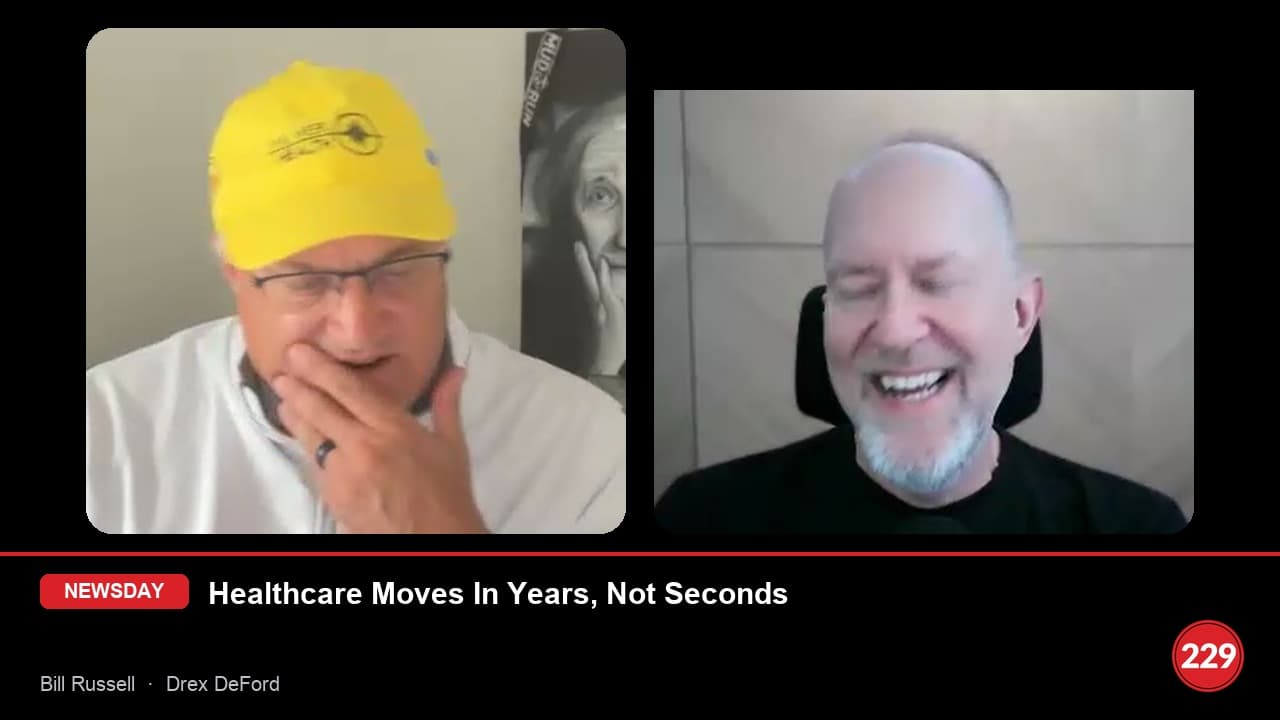
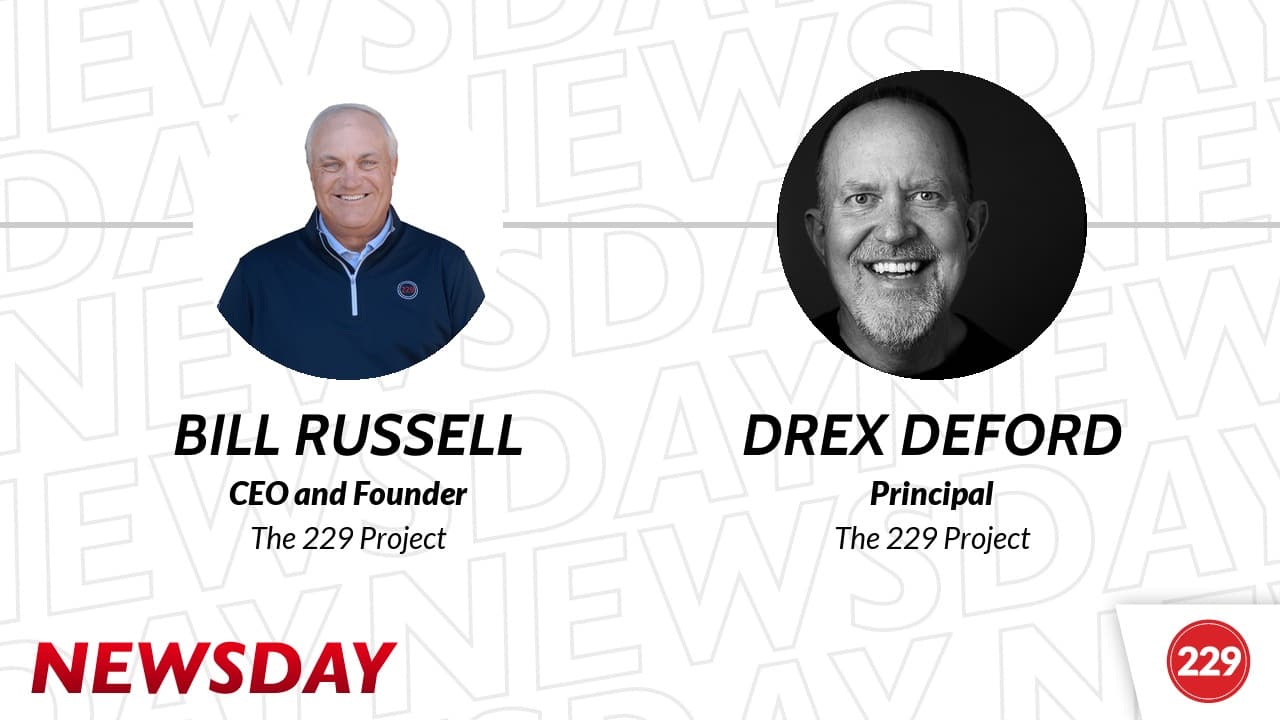
hosted by Bill Russell and Drex DeFord
August 10, 2026: Bill Russell and Drex DeFord preview Epic UGM (Sarah is on a plane to Charlottesville). Bill opens with the reframe that sets the lens for the whole episode: don't mistake a single big announcement for the real pace of change — healthcare moves in months and years, not seconds. Then the preview itself: AI and Agent Factory framed around clinician experience, ambient documentation a year after the freeze, the Bridge/Epic interoperability standoff and the 3-year hedge, the entire state of Washington on Epic, pharmacy as Epic's next growth line, and the leadership exodus — including Bill's real odds on Judy Faulkner's succession at UGM.
Key Points:
0:00 Healthcare Doesn't Move in Seconds
5:23 Sponsor: Cloudticity
7:09 Epic vs the Federal Government
12:43 The 3-Year Hedge
20:32 Epic Leadership Exodus
22:48 Judy's Exit, on Bill's Terms
Donate: Alex’s Lemonade Stand: Foundation for Childhood Cancer
This transcription is provided by artificial intelligence. We believe in technology but understand that even the smartest robots can sometimes get speech recognition wrong.
Healthcare Doesn't Move in Seconds | Newsday with 229Project
[00:00:27] Alright, we're gonna have fun today! It is Newsday, and I am joined by Drex DeFord, and we put Sarah on a plane. Sarah's heading to Charlottesville, Virginia, for a city tour dinner. I am… have a little shorter flight, so I'm not leaving till tomorrow morning. I'm heading up to Raleigh.
[00:00:48] for a Raleigh, North Carolina, for a city tour dinner, and we will have those conversations, and then the next time we will be in person, Drex. Will be Epic UGM. Yeah, that's right. Sometime around the 15th or so of this month. We're in August. Can you believe we're in August already?
[00:01:05] I know, I was, it blew me away, actually, this weekend. Woke up on Saturday, and I was like, what happened to July? It's like… Can't believe we're here already.
[00:01:15] Yeah, it is crazy. For those who haven't been to UGM, and it's interesting for me, I've now gone… this will be my third year of going. The first year was really interesting, just to… it is a user group meeting, right? So it's not a… It's not a traditional… conference, if you will. They do have an area for the partners.
[00:01:36] And that is really around solutioning and conversations and those kind of things. They govern that pretty seriously. They will, you know, they're gonna put the usual topics together, AI and agents, analytics, interoperability. They have so many breakouts and so many different discussions going on. You'll have RevCycle, you'll have patient experience, Hop Health, you name it.
[00:01:59] They'll have stuff on the CRM, on, pharmacy, on, I mean, it just… it just goes on and on. There's… there's… They light up the campus, and things, there, there's just a lot of things to go to. They'll start it off on, on, I think Monday, with the advisory councils. They'll have the executive forums, CIO, CFO, CEO, maybe, legal, nurse execs, and others, they'll get together, they'll hear what's coming down the pike, and for the first year, I'm going to get to sit in on one of those sessions, so that, the CIO session, so I will be hearing it as the CIOs are hearing it, and…
[00:02:40] Sounds like fun! It will be… it will be different for me. I'll have to… you know, I'm gonna take a slow approach to it, take a lot of notes, and talk to a lot of people about what they're thinking and what they're hearing. And then, obviously, you have the big executive address. That, comes on Tuesday morning. A lot of those same things, then, from that… Earlier session will be said later.
[00:03:05] Yeah, yeah, yeah. In a different way, in the… The CIOs will hear nothing new on Tuesday morning. If they hear anything new, something has gone hard. Probably dropped the ball, yeah.
[00:03:16] Yeah, it's designed that way, and it works out pretty well. So they will hear it all the day before, and get an opportunity to give Epic some feedback. They'll say, hey, you know what, you know, you didn't give us enough time, this isn't working, this needs to move forward faster. So all the sausage-making stuff happens in those executive… or the feedback, it's better, not sausage-making. It's, there's always a surprise in there, too. I mean, you know, there's things that they've probably had conversations with folks at Epic about over the course of the year, and they get to this session.
[00:03:50] and now here's what we're gonna really announce tomorrow, but here's what you kind of told us you wanted in here. There's always a surprise. There's always something that it's like… Where did that come from.
[00:04:01] Yeah. Well, I mean, we'll… I, Yeah, we'll see where that… that goes. I… so, we said last week we were going to spend this episode talking about what we anticipated hearing at Epic UGM next week, and clearly we'll hear about AI and agents and Agent Factory. All that stuff will be front and center, but it won't be… You know, some of these… some of these organizations, they make the mistake of presenting AI for AI's sake, and Epic will not make that mistake. They will… they'll put AI in the context of the clinician experience, they'll put it in the context of
[00:04:33] Patient self-service, operations automation… problem that the health system has told EPIC they're trying to solve. Right, exactly. I mean, there's gonna be some things the… you know, hopefully they made some progress on their ambient documentation. I know, I've heard… I've heard from a bunch of CIOs that are going to go in that direction. It's just… from their perspective, it's just purely a money thing.
[00:05:01] It's not better integration, it's not a better solution, it's just, like, it's just a financial decision. We're going down the Epic path. We chose the platform-first, or Epic-first strategy a long time ago. So they're going to want to see progress on Cheer, they're going to see progress on… The ambient documentation.
[00:06:07] Do you think the ambient documentation thing, too, when it was announced last year, obviously a big kerfuffle when that, you know, came out, a lot of folks kind of really then went on the fence. Do we do this? Do we do that? Do we wait on Epic? And now we're a year later, and I don't… I don't… it's not the… it's not the best news in the world that I hear, obviously, from the… from Epic clients, and it makes me wonder if this starts to lean into some kind of a trend of… not… it's not a trend we haven't already seen, but it's kind of reconfirmed. They make these announcements to kind of cause everybody to freeze.
[00:06:50] And then a year later, like, how… how well we doing? So it'll be… it'll be kind of interesting to hear their… where they're at. what they're planning to do in the next quarter or the next 6 months, because it's a… it's a strategy. You know, it's a strategy to freeze folks in some ways.
[00:07:08] There is only one organization with more power in healthcare than Epic. And, the two are almost positioned to be at odds with one another. Now, I know Epic plays nice with the federal government. The federal government tries to play nice with Epic, but they both have sort of different approaches to this. The federal government would like interoperability to the entire medical record, quite frankly. If they could open up Epic tomorrow, they would absolutely do it.
[00:07:40] open the keys, throw it open, give access to the innovation community. And you can almost see the federal government. They keep having these meetings. Where they invite in these people, and you're like, what do they have to do with healthcare? Like, what's going on? Why are they at the table? Now, to Epic's credit, they're also at the table. They're like, no, no, we should be here, and they should. And then they have conversations around where they're going to take interoperability, how they're going to open this up to the innovation community, and where that's going to go.
[00:08:10] But obviously, the second most powerful organization in the country with regard to healthcare is Epic, and so they use… sometimes, you know, we have these conversations, and just so everybody… full transparency, they are now a sponsor of the 229 Project and the Sukhalla. But as I tell all of our partners, it's not going to change what I… it's not going to change what I say. They have used their position to their advantage over the years. I don't think in a malicious way, but I think in a way that says, we know what's best for healthcare, we're going to take care of our clients.
[00:08:44] And we don't think just throwing open the doors and giving everybody access to the medical record is what's best for patients. Or, what's best for healthcare, therefore, or our clients. Therefore, we're going to take this very, methodical approach, this very well-thought-out approach that says, yes, we believe in interoperability, but we believe with constraints around interoperability, so that we don't end up with Any number of the cases that we've seen over the last couple of years.
[00:09:12] I feel like sometimes it's, it's like a mom and dad thing, the federal government in Epic, right? The federal government is… dad has these crazy ideas and wants to do cool stuff, and mom is like, now, well, hold on for… hold on just a second, let's slow down, and maybe it's the other way around. I don't… I don't want to stereotype, but there's something there. I think their approach is very parental. They don't want to do anything that hurts the kids, hurts their customers, and so they think very carefully
[00:09:44] About all the potential bad things that can happen, because quite frankly, they've probably seen that those things nearly happen, you know, 100 times, building this system and putting it out over the last 20-plus years. 10 minutes But, I mean, if you thought about it, that would be my expectation. If I were a client of Epic. I want my partners to look out for me, for sure. Yeah, absolutely.
[00:10:09] You know, like, where's the line? You know, where's the… I'll tell you, one of the more interesting things to me… the thing with interoperability has always been writing back into the record, so it's really hard to write back into the record. Epic makes that hard by design. They want to Maintain the integrity of the medical record at all times. So, you saw an AquiHire. Is that how you say that? AquiHire? A-C-Q-U-I-H-I, alright, AquiHire. In the, industry. It was, I'm gonna forget the company they acquired, but a bridge went out and hired
[00:10:45] Four guys, right? And we don't know how much they paid for it, but my guess is they paid a ton of money for four people out of Silicon Valley. Their claim to fame essentially is the heck with the APIs, we can get the information back into any… if you, as a client, have access to the system.
[00:11:02] we can, you know, we can utilize your credentials to get that information back in, or the correct credentials. And, think of it, the old screen scraping technology with AI has improved dramatically, and this company had the next layer… whatever this is, it's the next layer of that. And this is… It feels to me like this is, a bridge… Hiring 4 people that are going to make sure that no matter what, move Epic makes.
[00:11:34] a bridge is not thwarted in the direction that they want to go moving forward. Like, they would… they would have to have the… agreement of every client to say, yeah, you're not going to use this technology to do this thing, which would get them in a little bit of trouble, because that gets them into this realm of… Hey, what are you doing here? What's actually going on?
[00:11:55] Yeah, and I think legal jeopardy You know, antitrust, anti-competition, whatever the category is, but… It is interesting, it's a really advanced game of tic-tac-toe. Every time Epic puts up circle. a bridge has moved their X into the right spot. So, it'll be interesting to kind of see how it continues. And again, back to UGM, how's this conversation going to continue to flow? Last year we saw, you know, a bridge had some great talking points right out of the gate after the announcement. They were ready to go, they were ready to talk about their relationship with Epic and the future that they were building, and all of that, and I think they probably have a whole set of talking points ready to go this year, no matter what the announcement turns out to be.
[00:12:43] I'll tell you what, Drex, I've heard a number of… the larger health systems, when I went to them, they essentially said, yeah, we're renewing with a bridge. I'm like, you go, what's the term? They're like, 3 years. We're gonna go for 3 years. I'm like, well, alright, well, that's… that's hedging your bets, maybe in 3 years, whatever, but it gives… it gives a bridge a fighting chance, right? 3 years of doing whatever it is that they are going to do. And if… if you talk to Shiv about this, he'll essentially say they're a great partner. We partner with them in every way, shape, or form to
[00:13:16] To help the clinician experience and the patient experience, and the… even the administrative experience, right, on the RevCycle and all those things now is the direction they're heading. I've always… Sorry, go ahead. No, no, please, go ahead. I was just gonna say, I've… you know, when this whole… ambient thing started, and we spent a lot more time with a bridge. I sort of felt like last year, it's a, you know, it's a mile race, and a bridge is already sort of 3 laps ahead in the mile race, and it was gonna take a long time for Epic to catch up, and I think Epic is…
[00:13:52] running faster than we think, and I'm not sure it's a mile race. Maybe it's a marathon. And so that lead is not as… 14 minutes Yeah, we… You know, it's not as big as we think. Yeah, a lot of times. But they continue to extend the lead, too. They keep doing really innovative things.
[00:14:08] We make the mistake in healthcare all the time, and I make this mistake as well. You know, we look down at our… we look down at our watch, and we keep looking at the second hand and thinking that's the most important hand on the… on the thing, and a lot of times it's not. I mean, we're measuring things on seconds, and it's like, yeah, that announcement was a big deal. And it did shake things up, but healthcare doesn't move in seconds. It moves in months and years and… Yeah.
[00:14:32] You know, it's like, so, it's… people got a chance to sit back and look at it and say strategically. I'll tell you, I think the one thing we underestimate is, once you put something in the hands of clinicians. I don't want to take it out, man, I had learned that lesson, like, even… no matter how bad it was, they were like, this is my thing. Exactly.
[00:14:52] And they… I feel… I feel that a lot of stuff that they… there was a lot of change to the… or resistance to the change, but once they got it, even though they complained about it and didn't like it, if you tried to take it away, hmm, no way. So, yeah, we're… There's a couple things I heard last year. I mean, you talk about, like, that announcement took a lot of oxygen out of the room. People talked about that a lot. But one of the things I found interesting was the state of Washington. The entire state of Washington went with Epic.
[00:15:24] So think about that. So they even subsidized some of the smaller systems to get on either Community Connect or their own platform. And I think what the announcement was, was essentially that the entire state of Washington was on Epic, which gave them a leg up in terms of, interoperability and… in, you know, public health and a whole bunch of other things, which is probably true. If you're all on the same system, then interoperability becomes…
[00:15:51] You know, now that's true. kind of, in a lot of ways, always been Epic's point, right? If everybody runs Epic, then we're all interoperable, and we have all the information, so we can do all this epidemiological studies and all of the other things, you know, with public health. I thought that was one of the more powerful announcements last year. I mean, it's… Yeah. I mean, it, it, it's, you know… The whole state… interoperability. The whole state, I mean, could they actually drive the cost of healthcare down in the state of Washington because everybody's on the same system?
[00:16:26] I mean, that's the promise of digital health, right? I would… that would be an interesting case study. Give it… give it another year or two, and I want to see, have we impacted outcomes, have we impacted cost, you know, quality of care… I think cost is always the long pole in the tent. We seem to never be able to get to the cost You know, no matter what we spend, no matter what we try to do, it always costs more.
[00:16:51] So, this will be a big conversation. It has been, continues to be. It's the intersection of the payer and the, payer and the provider, right? So Epic has their payer system. They want more and more payers to use it. The payers are reluctant to use it, because they're not really sure, I'm not… I've only talked to one or two, so I should hesitate, because this is going to be my opinion, but I think it's a trust thing, right?
[00:17:19] proprietary business, it's a very competitive business, and they don't… They don't like You know, the possibility that their secret sauce could be shared. And the biggest client, the client that Epic has communicated we are behind 100%, is the providers.
[00:17:36] And now they're saying, hey, payers, why don't you get on our system, too? It'll smooth the rails and all this other stuff. They're not wrong, by the way. They're absolutely… There's a change, too, right? So, I mean, in a lot of ways, I think they're thinking about this payer version.
[00:17:50] Because health systems have become payers, and payers have become health systems, and so… You know, they're working with customers, trying to figure out how to help them Handle their data more effectively. But it's, you know, it turns out there are a lot of payers out there who are just payers, and maybe they're also potential clients.
[00:18:15] Well, I'll tell you, it's the… when they compare the U.S. with other health systems around the world, the distinction is the way we're set up here with the payer-provider-type system. Oh, for sure. And, it's where an awful lot of, cost comes into play, inefficiency, waste… So, it's definitely an area worth… Epic continuing to push. The money track is, is gonna be important, rev cycle's gonna be important,
[00:18:44] value-based care… value-based care will be a significant discussion, always is. RevCycle will be significant. One of the areas I'm going to keep an eye on is, pharmacy. There's.
[00:18:58] Harvard sees a potential revenue model for these guys, because it's… it's interesting. So, you know, every time I go to my doctor, I go to Northwestern Medicine. I say, you know, who's your pharmacy? And I say, my pharmacy is, you know, Walmart, down the street, whatever. And you know what Walmart does? Walmart just reminds me every month, and then my stuff shows up on my doorstep.
[00:19:21] And I think this whole idea of, hey, I think we can do pharmacy in a way where, hey, who's your pharmacy? We'd like to be your pharmacy, we'll deliver your stuff, and they create that mechanism to compete with I mean, these are big competitors, but compete with Amazon, Walmart, and others, because there's money to be made in pharmacy. I don't… I don't know why we… I don't know why we just walk away from that. I think that's going to be an interesting,
[00:19:47] Interesting growth area. And I did an interview with, oh, I'm gonna forget who it was with. It was with, Baptist. Baptist out of, Kentucky. And they… they set up a whole regional pharmacy warehouse with, logistics and all sorts of other stuff to do just this. And I think it's a… directly to patients. important play. But yeah, that's had this conversation… a couple years ago with Mark Cuban, too. Yeah, huh.
[00:20:14] about the PBMs and the cost in the system, and… You know, the work that he's doing, too, so… So, it's not just gonna be ambient listening, it's not just gonna be AI, it's not just gonna be… well, we'll talk RCM, we'll talk access, and whatnot. I want to close on this topic. Because I think it's the thing that's on everybody's mind, and it is the, the exodus of key players out of Epic. It used to be you didn't have to worry about the fact that Epic was going to… Judy talked about it for years.
[00:20:47] And as plans, it was going to be a very, you know, there was… it was just gonna be very seamless, and it was going to be a nice transition into the future, and, you know, your BFF wasn't gonna change, and the core people you're… and now all of a sudden, like, overnight. A whole bunch of people left, and they were not… they were not insignificant people, they were significant.
[00:21:14] relational, capital within the organization, and relational capital with, because one of the things about… Yeah, these, these, these Epic… Epic doesn't have a sales force, so the people who interact with the clients. are these people? And then all of a sudden, you know, a whole bunch of them left.
[00:21:31] I was with the CMIO Summit table a few weeks ago in Chicago, and a lot of this was sort of happening about that same time, or just before that, you know, we had all met. And the conversation in that room, you know, was essentially, like, we're really used to this with all of our other partners. turnover, and people leave, and new people come in, and the CEO leaves, and, you know, a venture capital firm makes an investment, and they change leadership, and honestly, we never think anything about it. But when it's epic, and they've been so rock solid for so many years, that one thing feels Extremely strange, and there's been a few of them.
[00:22:12] Not that it's really made them, like, rethink what they're gonna do with Epic, but it's made them pay more attention to this. So, I think that chunk of announcement, that conversation about Here's what we're doing to… you know, I'm not sure restabilize is exactly the right word, but here's what you will need to know, right? Transparency is the power, and… in relationships, not leaving people to second-guess, or make up their own rumors, or try to… try to make bets on what's actually happening over there. Just be really transparent. I think if Epic does that, then all of this Is water under the bridge.
[00:22:48] You were there when somebody asked, you know, will Judy announce her retirement from the stage? And my answer was zero. I don't think it's zero, but I don't… it's really low percentage that that would ever happen. She… she will do this in a well-thought-out way. It's just how she's done everything, so it… it won't be, surprise, I'm retiring! Imagine that. That would be… that would just be crazy. So it's not zero, but it's… it's not 10% either, it's pretty low.
[00:23:19] However, you know, this will be part of the conversation in some of the subgroups. It absolutely… it will absolutely come up in the CIO group and some of the other executive sessions. The, the… you know, again, Judy's amazing. I think she's amazing. I think what she's done is amazing. I think her, it's impossible to question her motives. She's always looking out for what's best for her clients and what's best for the patient. And so you can't question that in any way, shape, or form.
[00:23:52] But if I were coaching her. And I'm not, just to be clear, I would have said, you know what, Judy, you should be the emeritus at this point, you should be the chairman, and somebody else should be running the company. That should be very clear who that person is, they should be running it, they should be making decisions, they should be doing the address. From the stage. Now, I know she… she gave some at the, you know, the forward-leaning stuff, but I mean, her role on stage should be so minor at this point, sort of communicating that
[00:24:27] Hey, we are making… Yeah, the transition's in progress, and… the company you're experiencing today, I could die tomorrow. The company you're experiencing today is the company. And that's really what she believes is going to happen, and she's done a great job with the culture, and I believe that for a period of time, that's what's going to happen for sure. I mean, when you… when you spend that much time building the culture, it tends to outlast you. The difference between Steve Jobs the first time around and the second time around?
[00:24:57] I remember reading a whole bunch of articles where Steve Jobs went out and hired professors to teach his employees, and he created this whole university system within, and he just drove home, it's like. you know, this is what we did wrong before, this is what we do now. And one of the points I know that he made in that thing was, we need cash. We will never run out of cash again. Well, how much cash does Apple have now? It's like a bajillion dollars. But he also talked about innovation, and we don't have to be first.
[00:25:29] Apple never has to be first. We just have to stay true to, you know, the highest quality and whatnot. And I'm sure she… There's a lot of companies who've made these kinds of transitions over time, where the founders stepped away as the founder and CEO, and really became The idea person, the visionary person, the… you know, the Yoda for the company, and someone else just stepped in, daily operations and making everything happen, and, you know, there's a good symbiotic relationship between the two, but it does signal You know, the transition is happening, so…
[00:26:07] But, with all that being said, it's her company, she can do whatever she wants. She absolutely can. I'm lucky enough, I got to know Judy originally in the early 2000s. We were both on the HIMSS National Board, and we've been, you know, we've been friendly ever since, and I'm with you. Like, she's brilliant, and Man, I've never seen anything else like it, so… she has earned the right to exit on her own terms. But, you know what, don't be surprised if people are a little antsy at this UGM, because…
[00:26:41] As you said, it's not something they've seen or experienced before from Epic, which is really the only reason that I think people are a little concerned. They're like, man, we… we put this in the category of, we don't have to worry about this. She needs to put this back into the category of, we don't need to worry about it.
[00:27:02] So, it will be interesting. You and I will be there, Sarah will be there as well. We're gonna do our meetup, which we do every year there, and then we will go to everybody else's parties. We try to do ours a little earlier, so that we can, hang out with some of the other… people who are going to be there. So, anybody who's listening to this, if you are coming and want to know more about the meetup, you can, and haven't received an invite yet, send a note to Drex at 229project.com.
[00:27:33] Or, or obviously, Bill at 229project.com. That is not our naming convention, by the way. Bill and Drex and Sarah all go by the first name, the rest of the company has a little different email convention, but yeah, if you want an invite and haven't been invited, just shoot us a note, and we will make sure that that happens. Yeah, I'd love to see you there. Yeah, I'd love to see you there as well. Alright, hey, everybody, thanks for listening. That's all for now.
Keep exploring
Newsday · Yesterday
Newsday · 37 min listen
Newsday · 34 min listen
Newsday · 36 min listen
Newsday · 29 min listen