

 Apple Podcasts
Newsday · 37 min listen
34:01
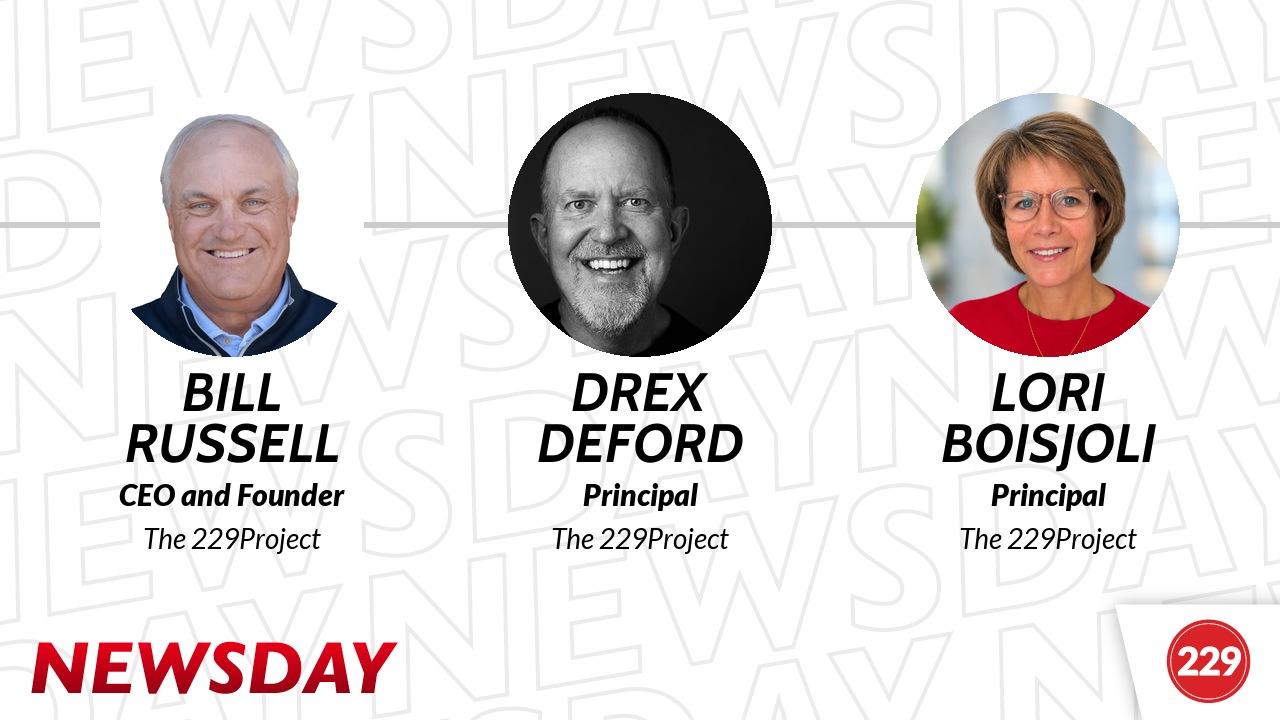
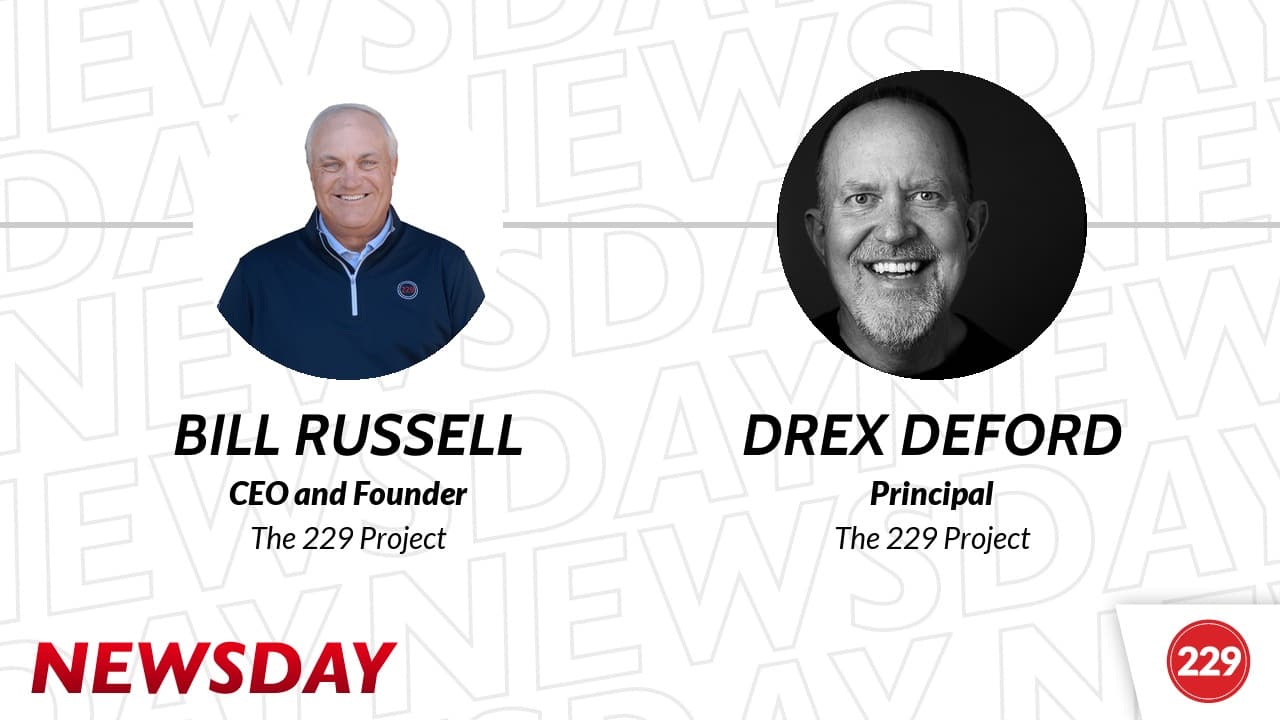
hosted by Bill Russell, Drex DeFord and Lori Boisjoli
November 9, 2026: Bill Russell, Drex DeFord, and Lori Boisjoli, in Lori's first Newsday as a 229Project principal, back from regional staff roundtables in Boston and Charlottesville.
An AI agent that logs in with someone's password is that person, as far as an auditor can tell. Drex DeFord expects the question that follows: why did you open this patient's record 250 times? "That wasn't me, that was my bot" won't be accepted. Bill Russell runs 12 GrokBots at 229Project, and his first problem was whether that is one identity or 12.
Lori Boisjoli would treat each bot like a new hire: a role, access to specific systems, an audit history, and a way to terminate it. The same agents are already working in physician practices and in vendors connected to health systems, often on a person's credentials. Bill gives it about three months before they are everywhere.
Key Points:
0:00 Auditors won't accept "that was my bot"
0:28 Roundtable takeaways and a bot for governance
4:51 EHC Consulting
5:18 October's outages and the holes AI keeps finding
8:28 Island
8:56 Know what happens when an app goes offline
12:41 Rackspace
13:29 Who pays and who's liable for AI in care
23:22 One bot or 12? Registering AI agents
30:43 Bots that talk to each other, and bots you don't control
33:34 See you next week
Donate: Alex's Lemonade Stand: Foundation for Childhood Cancer
This transcription is provided by artificial intelligence. We believe in technology but understand that even the smartest robots can sometimes get speech recognition wrong.
Your AI Bots Are Logging In as You
[00:00:00] Drex: I'm telling you, the way we're built today, too, when you get the audit and it says, will you access this patient's record 250 times between this date and this date?
[00:00:07] Drex: Tell us why you were doing that. They're not gonna take the answer that that wasn't me, that was my bot.
[00:00:13] Drex: they're not going to take that answer. If you gave that bot your login credentials and your password, that's you logging in and doing whatever it is that bot is doing, so…
[00:00:28] Bill: All right, it's Newsday, and today we are joined by Drex DeFord, the incomparable Drex DeFord from Seattle, Washington, principal for the 229Project, and newly
[00:00:40] Bill: Joining Lori Boisjoli.
[00:00:43] Bill: principal for the 229Project. We started announcing you as such last week, and put you straight to work. Took you to the Boston Regional Staff Roundtable, the Charlottesville Regional Staff Roundtable. Welcome to the team, this is…
[00:00:59] Bill: This is exciting. It was, it was, it was good to have you on stage and doing those, doing those events. Welcome on board!
[00:01:07] Lori: Thank you. Great to be part of this.
[00:01:10] Bill: The, so, give us a rundown. We're gonna start with you. You said, take it easy on you, and we're just gonna go straight at you.
[00:01:17] Bill: So, Boston and Charlottesville. What did you take away from those two as you think through the conversations? Again, we did AI in the morning, we did, this is for the listeners, AI in the morning and resilience in the afternoon. What did you walk away from those, those events?
[00:01:37] Lori: Well, if we take it, sort of, from those
[00:01:39] Lori: two topics, let's see, on the AI side, the quote, internet is dead. For AI to work, you need to know the workflows and the expected outcomes, just sort of, you know, reiterating how important that is.
[00:01:55] Lori: We learned that Centra is using AI to govern AI intake, which I thought was a great learning.
[00:02:05] Lori: That LLMs can give you a false sense of security, and none of it's sort of really new, but, like, reiterating kind of what we knew and the important stuff. And then I think prioritization, is certainly still a problem. You know, it's been that way for years and years, and, you know, we…
[00:02:21] Lori: Kept hearing, no one says no to anything, and that is a real… a real problem for sure.
[00:02:27] Bill: Yeah, so 12 cities, and Drex… I didn't go to all of them, Lori didn't go to all of them, but I think just about every city, it was, can't say no. Can't say no to the…
[00:02:39] Drex: Capacity and prioritization. I mean, just this idea of…
[00:02:43] Drex: We've never heard a good idea, we've never heard of an idea that we didn't like.
[00:02:48] Drex: And, leadership has a really hard time saying no, for whatever the reason is.
[00:02:54] Drex: The reality is, a lot of these ideas feel like they're no-brainers, and we absolutely should be doing them, but the reality then is that we just don't have the capacity to do all of them, especially at the same time.
[00:03:06] Bill: Lori brought up this… the point that was made, which is a bot for governance. And as I heard it, I sat there and I thought, oh my gosh, yeah!
[00:03:16] Bill: Like, the people who are thinking of a project, whatever, having a bot that we, you know, push in the governance mindset and framework and whatnot around, they could go back and forth, and the bot could essentially say, look.
[00:03:31] Bill: you know, your ROI's a little weak, this is a little weak, you need more of this, go find this detail, go find this information. It could really… it could really help governance processes to have a really well-defined
[00:03:44] Bill: AI bot helping people to put their projects together, I think.
[00:03:51] Drex: I think if you looked at the,
[00:03:53] Drex: If you had some really good criteria that were built, and some kind of rules of the road, understanding that…
[00:04:00] Drex: I've done this over and over and over again. There's nothing that comes out to be a purely mathematical solve for this prioritization problem. There's still a lot of gut in the end, but you could get really good at, like, these are probably the top, you know, issues, and these are probably the bottom issues, and we might need to move some things around.
[00:04:20] Drex: But yeah, I mean, even thinking about…
[00:04:22] Drex: Could you create a bot to help business, clinical, and research leaders who are submitting projects
[00:04:28] Drex: Look at their business plans, make their business plans better. Like, this looks weak, this looks strong, do more of this. You didn't fill out this part of the… you know, because you have… you would have a form, you would have… there would be some bureaucracy to this, but you could help them go faster, and not necessarily even fill out a form. You could have the bot ask them the questions, interact with them, and build the business plan
[00:04:49] Drex: The submission on the back end, right?
[00:05:18] Bill: Well, Drex… Lori… Lori has, she hasn't usurped your, position as Uncle Drex who tells us scary stories, but when she leads the… the resilience story.
[00:05:31] Drex: I know.
[00:05:32] Bill: Her outage story, you could just see eyes start to get wider, like, oh, yeah, man, we didn't think about that.
[00:05:39] Drex: It's such a great story. She was with me in Atlanta, and I did AI… the AI session in the morning, and, Lori did,
[00:05:46] Drex: Resilience in the afternoon, and yeah, leading…
[00:05:51] Drex: with that story is, like, everybody… we're… everybody's on board, everybody's listening to what she's talking about, so… what a great add to the team. I kind of said it online, fits like a glove. I'm so glad you're here. It's gonna be… I mean, it's a great fun ride, it's gonna be more fun with you, so I'm glad you're part of it.
[00:06:11] Bill: Alright, so, since you guys like resilience and like talking about resilience, October was not a great month for healthcare. So, UNM Health, home of New Mexico's only Level 1 trauma center.
[00:06:25] Bill: Went into containment on October 26th. Diverted ambulances, canceled clinics, outpatient surgeries, and resumed scheduled care on October 27th.
[00:06:36] Bill: You have University Hospitals still, now 10-plus days, has not restored their, MyChart or their e-prescribing.
[00:06:45] Bill: And there's no restoration estimate at this point.
[00:06:51] Bill: You know, it's… it's… it's interesting, and I've… I've gotten a few back-channel things from people who have finally gotten their hands on these,
[00:07:00] Bill: mythos-level things, and they're like, man, it's worse than you think. The amount of holes are worse than you think. And I'm like, man, I think they're pretty bad. They're like, yeah, you're not… you're not even touching the surface. I…
[00:07:14] Bill: Man, I was wondering, when do we think those mythos-level tools are going to get to the health systems, or are we just going to get them through partners at this point to see the kind of things that… kind of gaps that we have in our system?
[00:07:32] Drex: I think there's, since we have traditionally bought products and modified them, I think the right
[00:07:40] Drex: prioritization is probably go to the partners and let them look at their… look at their products and figure out where the holes are so that they could give us patches to make our software better. The… the software that we purchased better. The problem is.
[00:07:54] Drex: This is another one of those, like, this software didn't get written overnight, and it's taken years and years and years to create software that, in many cases, is this bad, whatever that turns out to be.
[00:08:06] Drex: So, every time there's a Mythos pass, or a, you know, a Frontier model pass, looking at software from a cybersecurity perspective.
[00:08:15] Drex: it probably finds new things. You hope that at some point, okay, that's it, we're good.
[00:08:21] Drex: But then, there are new vulnerabilities that are… that come out, like, this is a non-stop, you know, process.
[00:08:56] Bill: Lori, if you were in the chair, and you knew that some of your partners had the mythos-level stuff, and they're looking at their code and whatever, I mean, how would you… how would you approach that? I mean, you've had a major outage, you know the…
[00:09:07] Bill: You know the PTSD that goes along with that. You want to make sure there's not going to be another one. Are you pushing in any direction, or working with local,
[00:09:16] Bill: agencies… how are you… how are you getting in front of this for your health system?
[00:09:21] Lori: I guess in two ways. One, hopefully you have, you know, good relationships with your partners, like, really important, right? So, you know, not only when you have a problem, you know who to call, but also just, like, having these conversations, can you feed me what you have? It doesn't have to be the whole package, you know, just trying to extract what you can. But one of the things that I think is in
[00:09:46] Lori: full control of a health system is really… I don't think we know well enough
[00:09:52] Lori: And I don't think we document…
[00:09:57] Lori: what every application in our portfolio, like, how it…
[00:10:03] Lori: functions operationally, what happens if it goes offline? What is really, you know, impact from a clinical care perspective? What does it mean to our clinicians, to our patients? And we ask that question only when something happens, or, like, is it safe to pull it? What's gonna happen? We need to know that better.
[00:10:24] Lori: up front, because this is only going to happen more and more, and even if it's a patch, or I don't have the patch yet, but I know there's this vulnerability, we're going to make these decisions, and we're seeing it now. People are making that decision to pull that plug faster, right?
[00:10:40] Drex: It's gonna…
[00:10:40] Lori: wait and see. We're not going to ask the questions until after. We're going to try to be safe first. But if we don't know yet what happens when Stryker or somebody else goes offline, we're not as prepared as we could be, and I really think that's important work we could and should be doing now.
[00:10:58] Drex: there's a weird house of cards in a lot of ways, right? We don't know how the neck bone's connected to the ankle bone. When we pull the plug on things, we don't know what the cascade effect is going to be. So whether it's a system internally that we pull offline, or it's a vendor that winds up getting breached, and we decide to unplug from them.
[00:11:17] Drex: Or, I mean, whether it's a cybersecurity event, or it's AWS goes offline in the East for some period of time.
[00:11:25] Drex: we wind up with a lot of things we just haven't, we don't know about, we haven't figured out. I think there's a lot of good work that's going on with that right now. I actually read something about the crew at UCSD getting money, maybe from ARPA-H last week to do more research on
[00:11:44] Drex: I mean, it's kind of based on the Change Healthcare thing. If another change healthcare thing happens, what is healthcare really connected to, and who depends on what?
[00:11:54] Drex: So a lot of that mapping may happen. The problem with all of this stuff is the problem with everything, and that is that the snapshot that you have today will change in about, you know, 8 minutes, and, you know, the world and the connection will be different, so it has to be something that stays up-to-date all the time.
[00:12:13] Lori: And you also, from a prioritization perspective, you don't need it right now, and so it tends to sort of fall lower in the list.
[00:12:22] Drex: for right now.
[00:12:22] Lori: all of a sudden, you need it, and it kind of goes back to your conversation with the Tampa CISO, right? And, you know, that risk
[00:12:32] Lori: comparison.
[00:12:32] Drex: Quantification, trying to figure out what's actually the most important thing. Where do I put my time and my money?
[00:12:39] Drex: Given everything seems to be important.
[00:13:29] Bill: Far and away, the biggest conversation we've been having… I mean, cybersecurity still front and center, but the biggest conversation we're having is about finances and money. And, you know, it's interesting, so…
[00:13:43] Bill: this week.
[00:13:44] Bill: If we look at this week, in the news, as I'm looking at it here, there's really two
[00:13:50] Bill: big things that happened this week. One is Epic, there was a ton of stuff on Epic, and it all started with the, stat story inside Epic's empire, and they sort of took turns, like.
[00:14:02] Bill: batting them around, and it's all the usual players, right? It's the, third-party
[00:14:09] Bill: software developers that are trying to build things and that kind of stuff, and they're essentially saying that Epic's keeping them from being successful, so…
[00:14:16] Bill: I'm not even going to go into that story all that much. People can read that. It's worth, it's worth knowing that it exists. It's not like it's new, it's been around forever. The one I want to dive into a little bit, because it's… there's a direct financial…
[00:14:31] Bill: to it is, so federal AI policy has moved from rules to who pays and who's liable. So, in my most recent,
[00:14:41] Bill: health journey, I've relied very heavily on ChatGPT. And I am somebody who has said in the past, I would never take health advice
[00:14:53] Bill: from, from Sam Altman.
[00:14:56] Bill: And I probably still wouldn't take
[00:14:58] Bill: advice from Sam Altman, just to be clear. But, but OpenAI has been a really interesting partner, and so this morning I saw on the NT, ear, nose, and throat, and,
[00:15:10] Bill: you know, she said some things, she left the room, I pulled up ChatGPT, I said, you know, this is what she's saying, well, that's in alignment with what we've been talking about. I mean, I think people are doing this kind of stuff, and I don't think we're that far
[00:15:23] Bill: from it, impacting, and it looks like the federal government and others are… I mean, HHS and others are looking at this. So, HHS finalized HTI 5 on October 26th. It cuts 14 certification criteria, projects more than $1.5 billion in savings, and drops the HTI
[00:15:40] Bill: one AI model card requirements.
[00:15:43] Bill: Then, on October 29th, Senator Cassidy released a Patient AI Act discussion draft.
[00:15:50] Bill: Alright, so this is early on, but it would put non-device AI under ONC certification, creates HCPCS codes.
[00:15:59] Bill: an HHS coverage framework and a CMMI payment test for autonomous AI, and restate federal preemption of state product liability. In fact, I'm not even sure what that sentence… I'm just reading the sentence, I'm not entirely sure what it means.
[00:16:17] Bill: The AMA's liability framework puts responsibility for selection and governance on the deploying health system. AMA's liability framework puts responsibility for selection and governance on the health system. So that's… that phrase, I understand what that means. So, they're finally taking a look at liability, they're finally trying to figure out, like.
[00:16:35] Bill: Hey, is there money actually attached to this kind of stuff?
[00:16:38] Bill: Can health systems actually provide care in a certain way? Can they use AI tools? Can they use autonomous systems?
[00:16:45] Drex: Do they bill differently if they're using AI tools versus not using AI tools? Should they be paid more? Should they be paid less?
[00:16:53] Bill: Well, my thing is, if they're taking on the liability, absolutely.
[00:16:58] Bill: Right? Whoever's gonna… whoever chooses, if… look, if Sam Altman all of a sudden says, I'm taking liability, then by all means, start… start sending him some money. But if… if health systems take the liability, and none of the LLMs take the liability, then…
[00:17:13] Bill: you know, that that funding should go to the health systems, I believe. That's sort of my premise here.
[00:17:20] Bill: I'm curious, anyone want to jump on this one?
[00:17:22] Bill: Lori? Lori. Yeah, look at.
[00:17:24] Drex: Hey, Lori! Say it, Lori!
[00:17:26] Lori: Now, I guess what I'm curious about is, do they think, just because it's… I mean, payment models, right, with insurance companies or whatever.
[00:17:37] Lori: Interesting, how's that for a word? I'm curious if they think that,
[00:17:44] Lori: AI is involved, or it's autonomous, and there's not a human, you know, sort of doing a majority of the work, it should be significantly cheaper.
[00:17:54] Lori: But what we know is that AI, through third-party partners, through whatever, right now, is really expensive.
[00:18:04] Lori: And, you know, what the cost of that is to an FTE, we know it's faster, it's… might be more reliable, more, you know, like, all of those things, but I don't know that if you did that comparison, it's significantly cheaper that, oh, now we're going to reimburse with that different HCPCS code, you know, to say it's…
[00:18:24] Lori: we're gonna pay you 50% less. I don't know if that's an intent, but that's, like, one of the things to think about, you know, like, as, Bill, you're reading that.
[00:18:31] Bill: I've not spoken with HHS, but I've spoken with people who've been in the room with them, and they do believe that technology is an answer to the cost of healthcare.
[00:18:42] Bill: In some way, shape, or form. And I think we all think it is, but it's been inflationary to this point. Like, we keep stacking things on top of each other, and, you know, all these things are sort of a, okay, let's see if we can finally fit these pieces together to provide care in a way that is not inflationary.
[00:19:04] Bill: I don't know, it's, it's, it's, it's gonna be…
[00:19:09] Bill: It's going to be hard, but if there's an environment where it's going to happen, it will be in the next 2 years.
[00:19:16] Drex: I, it, I, I'm… I like…
[00:19:18] Drex: I always feel like… so, we go down this path, oh, if we add technology, it's gonna make it less expensive, it's gonna be better and faster and cheaper for the patient. And, you know.
[00:19:28] Drex: I think we thought that in 2008, when we did ARRA and Meaningful Use, and electronic health records came in, and there were a ton of unintended consequences, including physician burnout, and…
[00:19:39] Drex: people just leaving the industry because they just, you know, couldn't take it anymore, whatever the case, you know, may have been for those individuals who decided to exit. And I look at AI right now, and I think the same thing.
[00:19:52] Drex: In the best of all worlds.
[00:19:54] Drex: it's going to help make healthcare better, faster, cheaper, safer, easier to access. But there's no guarantee for that, and just because you're using AI doesn't mean that those things are going to happen, because you can use AI and be a… it could be a… it could help you create that…
[00:20:11] Drex: faster train wreck problem, right? So, this is the unintended consequences part that I always worry about. We're gonna use AI. Oh, you're using AI? We're gonna pay you more, because healthcare must be better, and that might not be true at all.
[00:20:25] Bill: Well, so… I want to push a little bit on this, and then I want to get to our closing segment. Our closing segment from now on is going to be around our use as a company around AI.
[00:20:35] Drex: Hmm.
[00:20:36] Bill: Okay, I'm just… that's what we're gonna close on from now on, on the Newsday segment. But on this one.
[00:20:43] Bill: You know, it's really interesting to me, because in all the conversations with
[00:20:49] Bill: OpenAI. So, OpenAI said, you probably have a viral infection, you should probably get an antibiotic. Now, ChatGPT, to my knowledge, at this point, cannot
[00:21:01] Bill: prescribe any medication, thank God. But that's how I feel today, but it might not be how I feel a year from now. A year from now, I might be like, you know, I consulted with ChatGPT. It's right… I mean, it's right more time…
[00:21:15] Bill: I was in front of doctors, and I said, you know, I trust ChatGPT at this point for my healthcare, and they're like, you know.
[00:21:24] Bill: The studies have shown, and we talked about this last week a little bit, Drex, the studies have shown that, you know, ChatGPT is wrong, you know, it doesn't agree… they didn't say wrong, it doesn't agree with itself every 6 or 7 times.
[00:21:37] Bill: And I'm like, look, if I went and… if I went and saw 7 different doctors, how many different diagnoses do you think I'm gonna get?
[00:21:46] Bill: I'm like, do you think I'm gonna get the same one all seven times, all 8 times? I guess if it was a very straightforward thing, maybe, but historically, that has not been the case. I mean, having that kind of… that kind of quality.
[00:21:59] Bill: Yeah, I don't know where this is gonna go, but I believe we need to tackle the liability, and we need to tackle, the cost.
[00:22:06] Bill: And health systems should start being reimbursed if they're going to take the liability on this.
[00:22:12] Bill: for delivering care in a more efficient way. And the reason I say the next two years is because what we're hearing is the amount of money coming out of the health systems through various mechanisms is pretty significant. And to a certain extent.
[00:22:26] Bill: you know, necessity is the mother of invention, right? So, constraints will, will start to create these new models for delivering care, and part of that will be reliant on the government
[00:22:42] Bill: Keeping up and saying, oh, that is a better way to deliver care.
[00:22:47] Bill: I understand why you didn't do it before, because you wanted to get that visit, but this is much better and much more efficient, we're gonna pay you this for this.
[00:22:55] Bill: As opposed to that. If they can keep those payments, if they can try to stay current with that stuff, and allow people to try new things, and get the proper payment for those things, we could see some good come from this. I don't know, that's my glasses half full. Drex… You and I have been…
[00:23:14] Drex: Oh, sorry, go ahead.
[00:23:15] Bill: Oh, I know, I know you're skeptical, and I am a little bit as well. The government never moves that fast.
[00:23:22] Bill: So, Lori, you're new to this. We, so we introduced GrokBot to the organization.
[00:23:29] Bill: And,
[00:23:31] Bill: you know, one of the things I am struggling with, and I think health systems are struggling with as well now, is we have these agents, we're giving them our credentials, they're going into our systems.
[00:23:42] Bill: And, and so now we're stepping back and going, okay, what is the solution to this? And, you know, you're the chief…
[00:23:52] Bill: What is, Chief Non-Human Resources? Is that what you call it?
[00:23:55] Drex: Yes, there's a Vice President of Human Resources, and there's a Vice President of Non-Human resources.
[00:24:01] Bill: And taking that model of saying, look, each… every time you hire a bot.
[00:24:07] Bill: you're hiring a person, and you're giving that person a job, a role, you're giving them access to systems, you're putting controls around their access, you are, you know, documenting their access to those systems. I think that's… that is going to be the mechanism that we do
[00:24:25] Bill: the… by the way, the first problem I came across was, with GrokBot.
[00:24:30] Bill: I have 12 of them now. Do I treat it as 1, or do I treat it as 12? And do I have a registry? Do I, like… Drex, if you create a new bot, you have to register that bot with the system so we know that that bot exists. Just like a… like, you wouldn't bring your kid to work and say, yeah, he's now an intern, he's gonna be here for the next…
[00:24:50] Drex: Gave him a computer, he's in the back of the office. Actually, I got 9 kids, they all came.
[00:24:54] Bill: They're all back, they're working. Oh, man.
[00:24:58] Drex: We're all using my ID to log in to different systems, and it's okay.
[00:25:02] Bill: It's as silly as it sounds.
[00:25:04] Drex: That's exactly what it is, though.
[00:25:07] Bill: So we have to, we have to register, and by the way, they're all, you know, Muse has a similar model, although you would never use it in the business world, but, but, Anthropic just came out with theirs.
[00:25:23] Bill: And it's in limited release, but I'm looking forward to getting my hands on it to see how they should set it up. But I think it's gonna be the same kind of thing. It's not gonna be a single bot that you're gonna set up, I think it's gonna be potentially multiple bots.
[00:25:38] Bill: I wouldn't mind going through…
[00:25:41] Bill: the… I was kind of impressed with the things you can do on the enterprise for GrokBot. Like, you can have… I can have instructions that we set at the enterprise level that hits every one of the bots you guys set up.
[00:25:54] Drex: And their behavior. How… things they can do and can't do, and what they should and shouldn't do, yeah.
[00:25:59] Bill: Yeah, I thought that was interesting. There was a couple other controls. I can control what connectors you can use as a company.
[00:26:07] Bill: Yeah. And so, I can… I can turn off certain connectors and that kind of stuff. I think they're thinking about it like an enterprise. I don't know that… I mean, I'm gonna have to go through it in detail, now that we… we did it just like we do everything else here. We're sort of like, hey, this is really cool, let's all try it, let's see how it goes. And Drex is going, whoa, what are you doing?
[00:26:26] Drex: I think we're getting there, right? I mean, I think that companies are starting to get there. A lot of this in the, you know, the first push has been…
[00:26:35] Drex: help individuals become more productive. And now they are starting to look at it as helping companies become more productive, and understanding, you know, your post over the weekend, like.
[00:26:46] Drex: how are my bots interacting with your bots? Is there a place for my bots to interact with your bots? That would actually save us some…
[00:26:56] Drex: Grok coins, or whatever, right? Because your guys and my guys are doing the same thing in some cases. There's a duplication effort about researching stories, or I don't know, whatever the case may be. Maybe we could just have a bot that we all share.
[00:27:11] Drex: to do some of this work, because it's pretty standardized work across all four of the principals, Sarah included. So…
[00:27:18] Bill: people may not know this about you, but you have a product management background. So, if you're approaching this from a product management standpoint.
[00:27:25] Drex: Yes!
[00:27:26] Bill: How would you, you know, what does it look like to approach this from a product management standpoint instead of a bunch of geeks in a corner going, this is really cool?
[00:27:37] Lori: you know, I think it's a lot similar to what we were saying earlier about understanding, sort of, the outcomes, right? Like, if I think about, you know, I'm old, right? So in the olden days, and I still think this is, sort of true today, you really need to think about what are the requirements. So many times you move to, the answer, you know, sort of the how, and really, the requirements are really about the what.
[00:28:01] Lori: So, I would, you know…
[00:28:04] Lori: I would interview you and Drex and Sarah and others and say, you know, what do you have today? What do you need? What… and, like, where are those crossovers? And, you know, try to get to the interactions. If you think about, if… if we were hiring a person.
[00:28:22] Lori: We would give that person a role. That role would be, you know, to prepare for this meeting, or to, you know, do whatever, summarization is necessary about the chairs going into a roundtable. Whatever it might be, we wouldn't… if that's their job, we would push that to them and expect to get that back.
[00:28:43] Lori: So, you know, why would we each do it ourselves? We should, you know, sort of rely. So I do think it is, you know, you think about Workday, and that's where everything we know about an employee, or whatever the application may be, you need that same kind of thing for.
[00:28:58] Bill: Putting bots into Workday. That's interesting.
[00:29:02] Drex: on their own, given the rules.
[00:29:03] Lori: You gotta be able to terminate them. You want that audit history. Like, I don't even know what internal audit, kind of questions are gonna come up. You know, so many of us have to, you know, produce some subset of, you know, what,
[00:29:20] Lori: what people have access to what systems and whatever, I would imagine internal and even external audit is going to want to see, those other pieces as well, and, you know, those audits happen all the time. We need to be prepared.
[00:29:35] Drex: I'm telling you, the way we're built today, too, when you get the audit and it says, will you access this patient's record 250 times between this date and this date?
[00:29:45] Drex: Tell us why you were doing that. They're not gonna take the answer that that wasn't me, that was my bot.
[00:29:51] Drex: they're not going to take that answer. If you gave that bot your login credentials and your password, that's you logging in and doing whatever it is that bot is doing, so…
[00:30:02] Bill: From now on, I'm just gonna have a thing that scrolls across the bottom that says, Drex says, never give your bot your own credentials.
[00:30:11] Drex: I'll tell you, though, in the next breath, I spent the weekend setting up GrokBots, and yeah, I probably have, I probably, you know, built 10 or 12 of them over the course of the weekend.
[00:30:23] Drex: there are places where, like, if they go into my G drive, or my mail, or my… and I probably shouldn't say that, I mean, it doesn't matter, everybody knows.
[00:30:32] Drex: or my Slack channel, they're logging in as me. They don't have their own identity to log into Slack and do work, and this is a problem with, kind of, like, the function of how they work today.
[00:30:44] Bill: Well, this… this is what I want the principals to…
[00:30:47] Bill: work on together. I want to put together this architecture, and I think part of it is that security model you're talking about, part of it is the registry section, Lori, that you talked about in detail, and I think part of it is, is we would never hire a person, or 10 people, put them in 10 different rooms, and say, you can never talk to each other. Because we know that that's completely ineffective.
[00:31:09] Bill: And so, somehow, my bots have to talk to Drexes, Drexes have to talk to Lori's, without being worried about them setting up their own little language and, you know, usurping us and replacing all of us.
[00:31:21] Bill: Which we saw earlier on with, gosh, what was that thing called? Anyway, not Hermes, the one before Hermes.
[00:31:29] Drex: Oh, I remember, yeah. Creating your own language, and…
[00:31:32] Bill: created their own language on the message board and that kind of stuff. They created their own religion, for everyone's sake. Remember when we were talking about
[00:31:41] Bill: They, like, seriously, they created, like, all this stuff, their own little society.
[00:31:45] Drex: There's a Toy Story, thing there, I don't know.
[00:31:48] Bill: Yeah, and so we as principals are going to be diving into this as a group and figuring out what our architecture needs to be.
[00:31:58] Bill: Here as a… as a company, and then hopefully being able to relay that to the rest of the world in terms of what this looks like. I can guarantee you, if you have physician practices that aren't… so we had physician practices in California that we did not control what the
[00:32:17] Bill: what the physician practices could use. I guarantee you there's a half dozen of them using GrokBot, there's a half dozen of them using, you know, Anthropic's new tool, a bunch of them using Dots.
[00:32:27] Bill: Like, you just… you have no idea. And you've given them credentials, because they have to, you know, they have to do referrals, they have to do whatever, and who knows, maybe they went to that front desk person and said, look how cool this is! You can just give it your credentials, and it could get into that health system, and it could do all this stuff for you. And,
[00:32:47] Bill: So, I think there's…
[00:32:50] Bill: It's gonna be… it's gonna be an interesting ride, and I think this is gonna be a quick ride, too. I don't think this is gonna be, you know, a year from now, we're figuring this out. I think this is something we need to figure out in, like…
[00:33:00] Bill: In the next 3 months, I think this is going to be pervasive.
[00:33:04] Drex: It's not just in your health system or in clinics that you don't control but are connected to you. It's also in your vendor partners, you know, third party, fourth party. Those same conversations, those same things, 200 people work in that company, 200 people each have 12
[00:33:22] Drex: GrokBot assistance. This is all happening
[00:33:25] Drex: you depend on those systems, it's happening out there, too, and we've seen how those things have turned into… into breaches and… and other,
[00:33:35] Bill: See, Lori, this is what he does. He comes on the show, he tells stories, and he scares all the kids. But it is Halloween, so we're gonna let him go ahead and get away with scaring the kids, but you also have that set of stories.
[00:33:47] Bill: Well, it's great, Lori, welcome to the show, and it's great to catch up with you guys, and everybody else, thanks for listening. That's all for now.
Keep exploring
Newsday · 37 min listen
Newsday · 34 min listen
Newsday · 36 min listen
Newsday · 29 min listen